A watt-meter can prevent you from buying a portable power station that is too small—or paying for capacity you do not need. Here is what to measure and how to use the results.
A watt-meter is one of the simplest ways to choose the right portable power station. Instead of estimating from an appliance’s label, you can measure its actual running watts, observe startup behavior, and calculate how much battery capacity you need. That matters most for refrigerators, freezers, pumps, medical equipment, and other devices that may use more power than their basic rating suggests.
What a watt-meter tells you
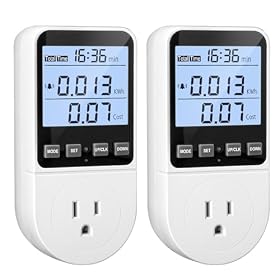
A plug-in watt-meter sits between a household outlet and an appliance. Depending on the model, it may display:
Instantaneous watts: The power the appliance is drawing right now
Voltage and amperage: Useful for checking the electrical load
Watt-hours: The energy used over a period of time
Peak or maximum watts: Helpful for spotting startup surges
Elapsed time: Useful when measuring an appliance over several hours or a full day
For portable power station sizing, watts and watt-hours answer different questions:
Watts determine whether the station can run the appliance at one time.
Watt-hours help determine how long the battery will last.
A station can have plenty of battery capacity but still fail to run a device if its inverter cannot supply the required startup or running wattage.
How to measure your appliances
1. Measure the devices you actually plan to power
Start with the appliances that matter during an outage or trip. Common examples include:
Do not rely only on the wattage printed on the appliance. Labels may show maximum input, nominal power, or a value that does not reflect real-world cycling.
2. Measure steady-state loads
Plug one appliance into the watt-meter and note its operating wattage. For devices with multiple settings, measure the setting you expect to use.
For electronics, allow the device to reach its normal operating state. A television, computer, or fan may draw less than its maximum label rating. A refrigerator may draw little power while its compressor is off, so a short measurement is not enough to estimate daily energy use.
3. Measure refrigerators over a longer period
Refrigerators cycle on and off, which makes a brief watt reading misleading. Record watt-hours over at least several hours, preferably a full 24-hour period that reflects normal use.
Also watch for the compressor starting. The startup event can briefly require substantially more power than the refrigerator’s running draw. If the watt-meter does not capture peak watts, treat the station’s inverter rating and the refrigerator’s documentation conservatively. A startup measurement device or manufacturer guidance may be needed for difficult loads.
4. Add loads only if you will run them together
Make a list of appliances that must operate at the same time. Add their measured running watts, then allow extra capacity for startup surges and measurement uncertainty.
For example, a refrigerator, router, and a few LED lights may have a modest combined running load. A refrigerator plus a microwave, coffee maker, or space heater is a very different load. High-wattage heating appliances can consume a large amount of power and may quickly exceed a small station’s inverter output.
Product prices and availability are accurate as of the date/time indicated and are subject to change. Any price and availability information displayed on Amazon.com at the time of purchase will apply to the purchase of this product.
Turning measurements into portable power station requirements
Inverter output: the watt limit
Compare your combined running load with the station’s continuous AC output. The station should have more continuous output than the total load you expect to run.
Then account for startup surges. Refrigerators, freezers, pumps, compressors, and some power tools may briefly draw more than their running wattage. Check the appliance documentation and the power station’s surge rating rather than assuming the continuous rating covers every startup event.
Avoid treating a station’s advertised surge figure as a normal operating rating. Surge capacity may last only for a limited period, and the manufacturer’s instructions determine how it applies.
Battery capacity: the watt-hour limit
Battery capacity is usually listed in watt-hours, or Wh. A simple estimate is:
runtime in hours = battery capacity in Wh ÷ appliance watts
Actual runtime is lower because of inverter losses, battery-management limits, temperature, battery age, and the station’s reserve capacity. For AC appliances, use a conservative adjustment rather than assuming every listed watt-hour reaches the appliance.
If an appliance averages 60 watts and you need it to run for 10 hours, the basic energy estimate is 600 Wh. The station should have additional capacity beyond that figure to account for conversion losses and changing conditions.
For cycling appliances, use measured watt-hours whenever possible. A refrigerator that averages 60 watts over a day does not necessarily run at 60 watts continuously; its energy use may vary with room temperature, door openings, and compressor cycles.
Product prices and availability are accurate as of the date/time indicated and are subject to change. Any price and availability information displayed on Amazon.com at the time of purchase will apply to the purchase of this product.
Choosing the right watt-meter
Plug-in watt-meter for AC appliances
For most households, a plug-in AC watt-meter is the best starting point. Look for a device that can display watts, cumulative watt-hours, elapsed time, and—if possible—maximum or peak demand.
A model with memory or a long-term energy display is more useful for refrigerators than one that only shows instantaneous watts. Verify that its voltage, current, and plug configuration are appropriate for the appliances you plan to measure.
DC watt-meter for battery and solar wiring
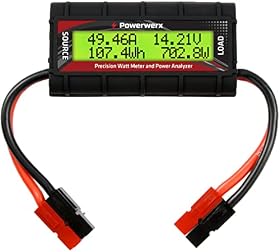
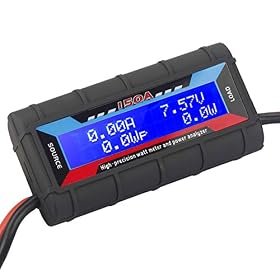
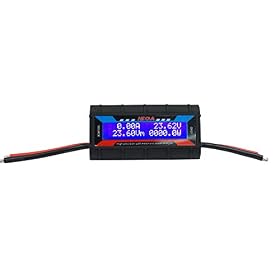
An inline DC watt-meter can measure power between a battery, solar panel, charge controller, or DC appliance. These meters are useful when evaluating 12-volt refrigerators, solar charging, or custom battery systems, but they require correct polarity, wiring, connectors, and current ratings.
Do not insert an inline meter into a circuit unless you understand the connection and the meter’s limits. For plug-and-play portable power station planning, measuring the appliance’s AC input is usually simpler and safer.
Product prices and availability are accurate as of the date/time indicated and are subject to change. Any price and availability information displayed on Amazon.com at the time of purchase will apply to the purchase of this product.
What a watt-meter cannot tell you
A watt-meter does not guarantee that a particular power station will start every appliance. It may miss a very brief inrush event, especially if it does not record peak demand. It also does not account for every issue involving modified or unusual loads, low temperatures, extension cords, poor connections, or incompatible charging equipment.
Use the measurement as one part of the decision. Confirm the station’s:
Continuous AC output
Surge or peak output and its duration
Usable battery capacity, if specified
Supported charging methods
Output waveform and appliance compatibility
Operating-temperature limits
Manufacturer guidance for refrigerators, pumps, medical devices, and other sensitive loads
Product prices and availability are accurate as of the date/time indicated and are subject to change. Any price and availability information displayed on Amazon.com at the time of purchase will apply to the purchase of this product.
A practical buying process
List the appliances you need during an outage or trip.
Measure each appliance’s running watts.
Measure cycling appliances over several hours or a full day.
Identify appliances that may have a startup surge.
Add only the loads that must run at the same time.
Choose an inverter with headroom above the combined load.
Choose battery capacity based on measured watt-hours and desired runtime.
Leave extra capacity if the station will be used in cold weather, with aging batteries, or under changing loads.
A watt-meter is especially worthwhile if you are sizing a station for a refrigerator or planning to spend several hundred dollars on backup capacity. For a small setup intended only for phones, lights, and a router, appliance labels may provide a sufficient first estimate—but measuring still reduces guesswork.
When you may not need one
You may be able to skip a watt-meter if every device has a clearly documented power requirement, the loads are small and predictable, and you are willing to choose a station with substantial headroom. You should be more cautious when powering compressors, pumps, heating devices, medical equipment, or several appliances at once.
For medical equipment or equipment that must remain continuously operational, follow the device manufacturer’s power requirements and consult a qualified professional if the consequences of interruption are serious.
FAQ
Is a watt-meter necessary before buying a portable power station?
Not always, but it is useful when you need to run a refrigerator, freezer, pump, medical device, or several appliances. Measuring actual watts and watt-hours can prevent both undersizing and unnecessary overbuying.
Should I size a power station by watts or watt-hours?
Use watts to check whether the inverter can run the appliance, including possible startup demand. Use watt-hours to estimate how long the battery can provide power.
Can a watt-meter measure refrigerator startup power?
Some watt-meters record maximum demand, but basic models may miss a very brief compressor surge. Check the refrigerator documentation and the power station manufacturer’s surge guidance as well.
How much extra capacity should a portable power station have?
There is no single percentage that fits every setup. Leave practical headroom above the combined running load and account for inverter losses, startup surges, temperature, battery aging, and changing appliance loads.