One large station is usually simpler for running a fridge or backing up several appliances in one place. Two smaller stations can be easier to carry and give you backup flexibility—but their capacity and output do not automatically combine.
If you need to run a refrigerator or several appliances from one location, one large portable power station is usually the simpler choice. Two smaller stations make more sense when portability, separate locations, or backup redundancy matter more. Compare usable energy and output—not just the watt-hour labels—and don’t assume two units can be connected to act like one larger station.
The short answer
Choose one large station when you want a single setup for a fridge, outage loads, or a campsite. It means fewer units to charge and monitor, and you can run several loads from the same device if its outlets and power rating allow it.
Choose two smaller stations when you’ll use them in different places, need to carry power in separate trips, or want one unit available if the other is depleted or unavailable. This flexibility comes with extra charging and setup management.
Compare capacity and output
Two specifications matter, and they answer different questions:
Capacity, in watt-hours (Wh): how much energy the battery stores. Add the two smaller units’ listed Wh to compare their nominal total with the large unit. Actual runtime will be lower than a simple calculation suggests because of inverter losses, battery reserves, and changing appliance use.
Output, in watts (W): how much power the station can supply at once. Check the continuous AC output for the appliances you plan to run. For motor-driven appliances such as refrigerators, also check whether the station can handle startup demand. Two separate stations do not automatically combine their output.
For a refrigerator, a wattage label alone may not predict runtime because the compressor cycles on and off. Use measured energy consumption if available, or treat any runtime estimate based on average draw as approximate. Confirm that the station’s AC output and the refrigerator’s startup requirements are compatible.
Portable power station for refrigerator and outage backup
Product prices and availability are accurate as of the date/time indicated and are subject to change. Any price and availability information displayed on Amazon.com at the time of purchase will apply to the purchase of this product.
When one large station is the better fit
A single large unit is often the practical choice if you want to:
Keep a refrigerator and other outage essentials on one station.
Reduce the number of cables, chargers, and battery displays to manage.
Avoid moving equipment between loads while power is out.
Use a supported expansion battery if you later need more capacity.
Before buying, check the station’s continuous and surge output, usable capacity, outlet types, charging options, and whether expansion batteries are supported. A large Wh figure does not guarantee that the unit can start or continuously run every appliance you have in mind.
Product prices and availability are accurate as of the date/time indicated and are subject to change. Any price and availability information displayed on Amazon.com at the time of purchase will apply to the purchase of this product.
When two smaller stations are worth considering
Two units can be more convenient when you need power in separate rooms, vehicles, or campsite locations, or when carrying one heavy unit would be difficult. You can also keep one charged as a reserve while using the other.
The trade-offs are more equipment to charge and track, and potentially less usable energy in a single location. If you need to power multiple appliances together, check each station’s own output limits and how the loads will be divided. Do not connect AC outputs, batteries, or cables between stations unless the manufacturers explicitly specify a supported configuration.
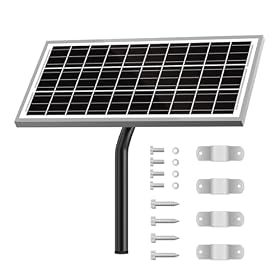
Solar panel for recharging a portable power station
Product prices and availability are accurate as of the date/time indicated and are subject to change. Any price and availability information displayed on Amazon.com at the time of purchase will apply to the purchase of this product.
Check charging and portability before deciding
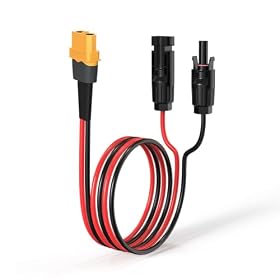
Compare how each option can recharge from a wall outlet, vehicle, or compatible solar panel. Two smaller stations may need separate charging sessions or equipment; a large station may take longer to recharge if its charging input is limited. Check the manufacturer’s charging limits and compatibility before choosing solar panels or other accessories.
Also compare the weight and handle design of each unit, not just the total weight on paper. One large unit may be awkward to lift, while two smaller units require two trips and more storage space.
A simple decision rule
For a fridge and several outage loads in one place, start by looking for one station with enough usable Wh and suitable AC output. For separate locations, easier carrying, or backup flexibility, compare two smaller stations—but count on each operating independently unless the manufacturer documents a way to combine them.
If neither option meets your needs, consider whether a compatible expansion battery, a different charging setup, or a smaller set of essential loads would be a better solution.
FAQ
Do two smaller portable power stations provide twice the power?
Not automatically. Their capacities can be added to estimate total stored energy, but their AC output remains separate unless the manufacturer supports a specific combined setup. Check each unit’s output limits and connection instructions.
Is one large power station better for running a refrigerator?
Often, if the refrigerator and other loads will be in one place. Check the station’s continuous output, startup capability, and usable capacity against the refrigerator’s requirements. Runtime depends on how much energy the refrigerator actually uses.
Can I connect two portable power stations together?
Only if both the connection method and the configuration are explicitly supported by the manufacturers. Do not connect their AC outputs or battery ports with improvised cables.
Are two smaller stations easier to recharge with solar panels?
Not necessarily. Check each station’s solar input limits and compatible panel requirements. Two units may require separate panels or charging sessions, while one larger station may have different input limits.