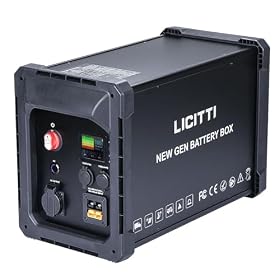
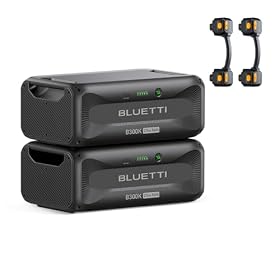
The best power station for a home outage is one with enough inverter capacity to start your refrigerator and enough watt-hours to run your essential devices for the expected outage. Use the sizing steps below before choosing a model.
A portable power station can keep a refrigerator, phones, lights, Wi-Fi equipment, and medical devices running during an outage—but the right choice depends on both watt-hours (Wh) and inverter output (watts). For most households, choose a unit with a pure sine wave inverter, enough surge capacity for motor-driven appliances, and more battery capacity than your calculated minimum.
What matters most in a home-outage power station
Battery capacity: watt-hours
Watt-hours indicate how much energy the battery stores. A simple estimate is:
runtime in hours = usable watt-hours ÷ device watts
In practice, allow for inverter losses and battery reserve. A power station labeled with a certain capacity will not deliver all of that energy to AC appliances.
For example, a refrigerator averaging 60 watts while its compressor is running may consume roughly 1,440 watt-hours if it ran continuously for 24 hours. A refrigerator normally cycles on and off, so actual daily consumption can be considerably lower—but it varies with room temperature, age, efficiency, door openings, and freezer load.
Use your refrigerator’s measured or manufacturer-listed energy use when possible. Then add the loads you plan to operate, such as:
A modem and router
LED lamps
Phone and laptop chargers
A television
A CPAP machine or other approved medical equipment
Small fans
For a short outage, a mid-capacity power station may be adequate for communications, lighting, and brief refrigerator operation. For an overnight or multi-day outage, look for substantially more capacity or a compatible expansion battery. Expansion batteries add runtime but do not automatically increase the power station’s AC output; check the manufacturer’s specifications before buying.
Inverter output: continuous and surge watts
The inverter converts battery power into household-style AC power. Its continuous output must cover the devices running at the same time. Its surge or peak output must handle startup demands from compressor motors, pumps, and some power tools.
A refrigerator may draw much more power for a moment when its compressor starts than it uses while running. If the station has insufficient surge capability, it may shut down, overload, or fail to start the appliance.
For outage use, prioritize:
A pure sine wave AC inverter
Continuous output above your expected simultaneous load
Surge capacity suitable for refrigerators and other motor loads
Enough AC outlets for the devices you actually need
A clearly stated overload and low-battery shutdown system
Do not assume that a higher battery capacity means a higher inverter rating. These are separate specifications.
How to size a power station for a refrigerator
Start with the refrigerator, because it is usually the most demanding essential appliance.
Step 1: Find its running and starting requirements
Check the refrigerator’s label, owner’s manual, or manufacturer documentation for electrical input. If the information is unclear, an electrician or a plug-in energy meter can help determine operating demand. Do not rely only on a generic online estimate when sizing a station for critical food storage.
Whether the refrigerator has an inverter compressor
If the label lists amps rather than watts, watts are approximately volts multiplied by amps. This is only an estimate because power factor and startup behavior also matter.
Step 2: Add the other essential loads
List only the appliances that must run at the same time. Add their wattages, then include a margin for startup and measurement uncertainty.
For example, your simultaneous load might include:
Refrigerator
Internet equipment
Several LED lights
Phone chargers
Avoid adding high-draw heating appliances unless the power station is specifically sized for them. Electric kettles, coffee makers, hot plates, hair dryers, space heaters, toaster ovens, and most microwaves can consume a large portion of a station’s inverter capacity.
Step 3: Estimate the required energy
Estimate how long each device will run during the outage. A refrigerator cycles, while a router may run continuously and lights may be used only at night.
Use:
daily energy = watts × hours of operation
Then add a reserve rather than choosing a station that exactly matches the calculated total. Cold weather, battery age, conversion losses, and unexpected loads can reduce available runtime.
Product prices and availability are accurate as of the date/time indicated and are subject to change. Any price and availability information displayed on Amazon.com at the time of purchase will apply to the purchase of this product.
Recommended capacity by outage use
These are planning categories, not guarantees. Actual runtime depends on the refrigerator and connected loads.
Communications and lighting only
A smaller station can be practical for phones, a router, LED lights, and laptops. This is the lightest setup and usually the easiest to recharge from a vehicle or solar panel.
Refrigerator plus essentials for part of a day
Choose a station with enough inverter surge capability for the refrigerator and enough usable energy for the expected compressor cycles, lighting, and communications equipment. A unit that is adequate for phones and lamps may still be unsuitable for a refrigerator.
Refrigerator plus essentials overnight
A larger battery is generally the better choice, particularly if the refrigerator must stay powered continuously. Look for expansion-battery support if you want the option to increase runtime later.
Multi-day outage support
For outages lasting several days, one power station may not be enough unless you have a reliable recharge plan. Consider a compatible solar panel setup, vehicle charging, an additional battery, or a properly installed home backup system. Solar charging depends on sunlight, panel placement, weather, charge-controller limits, and the station’s solar input rating.
Product prices and availability are accurate as of the date/time indicated and are subject to change. Any price and availability information displayed on Amazon.com at the time of purchase will apply to the purchase of this product.
Features worth prioritizing
Pure sine wave output
Pure sine wave AC is the conservative choice for refrigerators, medical equipment, chargers, and other sensitive electronics. It closely resembles utility power and avoids compatibility concerns associated with some modified-wave inverters.
LiFePO4 battery chemistry
Many newer power stations use lithium iron phosphate, also called LiFePO4. Compared with some other lithium chemistries, LiFePO4 is commonly selected for its long cycle-life potential and thermal characteristics. Actual durability depends on temperature, charging practices, depth of discharge, and the manufacturer’s battery-management system.
Follow the manual’s temperature limits. Do not charge or operate a battery in conditions outside its stated range.
Recharge options
Useful recharge methods can include wall AC charging, vehicle charging, and solar input. Compare the station’s input limits with the charger or panel you intend to use. A larger solar array does not guarantee faster charging if the power station limits solar wattage or voltage.
For outage readiness, also consider whether the unit can charge while powering loads. Pass-through or UPS-style operation may have limitations, transfer time, or battery-wear implications. It should not be treated as a substitute for a professionally installed standby system unless the manufacturer explicitly supports that use.
Low-noise operation
Power stations are usually quieter than fuel generators, but fans may run when the inverter is heavily loaded or the battery is charging. If the station will be used in a bedroom or living area, check the manufacturer’s noise information and operating conditions.
Product prices and availability are accurate as of the date/time indicated and are subject to change. Any price and availability information displayed on Amazon.com at the time of purchase will apply to the purchase of this product.
Safe ways to connect it during an outage
Plug appliances directly into the power station whenever possible. Use appropriately rated extension cords only when the manufacturer allows them, and keep cords dry and undamaged.
Never connect a portable power station to a household wall outlet to energize home wiring. This can backfeed utility lines and create a serious shock or fire hazard. If you want selected circuits powered through the home’s wiring, use equipment designed for that purpose and have the installation completed by a qualified electrician in accordance with local requirements.
Keep the station away from water, excessive heat, and blocked ventilation. Do not cover cooling vents. Inspect cables and plugs before use, and stop using the unit if it becomes unusually hot, swells, emits an odor, or shows other signs of damage.
Product prices and availability are accurate as of the date/time indicated and are subject to change. Any price and availability information displayed on Amazon.com at the time of purchase will apply to the purchase of this product.
Common sizing mistakes
Choosing by battery capacity alone
A large Wh number does not help if the inverter cannot handle the refrigerator’s startup surge.
Ignoring recharge time
A station may run the required loads but take too long to recharge from your available source. Check AC, vehicle, and solar input specifications separately.
Running every appliance in the house
Portable stations are best used for selected essentials. High-wattage heating appliances can drain the battery quickly and overload the inverter.
Forgetting cold-weather limitations
Lithium batteries may have charging restrictions at low temperatures. Store and operate the station according to the manual, especially in an unheated garage or vehicle.
Waiting until the outage to check compatibility
Before an emergency, test that the refrigerator starts, the plugs fit, the charging cables are present, and the station’s display and controls are understood. Keep the battery charged according to the manufacturer’s storage guidance.
When a portable power station is not the right solution
A portable power station may not be suitable if you need to run central air conditioning, an electric furnace, a well pump, a sump pump, a whole-home load, or multiple high-wattage appliances for several days. Those applications may require a larger battery system, a generator, or a professionally designed standby system.
If your refrigerator repeatedly trips the station even though the listed running watts appear acceptable, its startup surge may exceed the inverter’s capability, the refrigerator may have a fault, or the station may be overloaded by other devices. Disconnect everything else and try the refrigerator alone. If the problem continues, consult the refrigerator and power-station manufacturers rather than repeatedly resetting the unit.
The best power station for a home outage is therefore the one sized around your actual essential loads: enough surge watts to start the refrigerator, enough usable watt-hours for the outage period, and a realistic way to recharge it.
FAQ
What size power station do I need to run a refrigerator during an outage?
It depends on the refrigerator’s running and startup requirements, its cycling pattern, and how long you need it to run. Choose a station with a pure sine wave inverter, continuous output above the simultaneous load, sufficient surge capacity for the compressor, and more usable battery capacity than your minimum calculation.
Can a portable power station run a refrigerator overnight?
It can, if the refrigerator’s cycling energy use and your other loads fit within the station’s usable watt-hours. Allow for inverter losses and reserve capacity, and confirm that the inverter can handle compressor startup.
Can I plug a power station into a wall outlet to power my house?
No. Plugging it into a household outlet can backfeed electrical wiring and endanger utility workers or occupants. Use direct appliance connections or have a qualified electrician install an approved transfer or inlet system.
Are expansion batteries worth buying for outage backup?
They can be useful when you need longer runtime and the power station supports them. An expansion battery generally increases stored energy, not the inverter’s maximum output, so verify compatibility and limits before purchasing.
What is better for an outage: a power station or a gas generator?
A power station is quiet, produces no local exhaust, and is convenient for essential electronics and moderate loads. A fuel generator may provide longer operation and higher output but requires fuel, ventilation, maintenance, and safe outdoor placement. The right choice depends on the loads, outage duration, and local safety requirements.