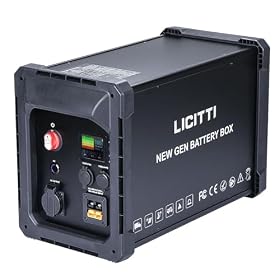
Measuring a refrigerator’s running watts is a useful starting point, but it is not the whole sizing calculation. You also need to account for compressor startup surge, expected runtime, battery efficiency, and how you will recharge the power station.
Buying after measuring the fridge running watts
If you measured your refrigerator’s running watts, you have an important number for choosing a portable power station—but do not match the power station’s output to that number alone. A fridge compressor can draw substantially more power for a brief startup surge, and the battery capacity determines how long the refrigerator can operate during an outage.
Use the running-watt measurement to check continuous output, then size for startup surge and the number of hours you need.
Start with the fridge’s measured running watts
The portable power station must be able to supply at least the refrigerator’s running load while the compressor is operating. Leave headroom rather than choosing a unit whose rated continuous output is exactly equal to the measurement.
For example, if your refrigerator measured 150 watts while running, a power station rated for 150 watts continuous output is a poor match because it has no margin for measurement variation, other connected devices, or brief changes in the load. A unit with substantially more continuous output is a safer choice.
Your measurement may also vary because refrigerators cycle on and off. A reading taken while the compressor is idle will not represent the load when cooling starts. Take several readings if possible, including during compressor startup, and follow the meter manufacturer’s instructions.
Check startup surge before buying
Refrigerator compressors often require a short burst of higher power when they start. This is commonly called starting watts, surge watts, or peak watts. The power station needs both:
Continuous output: enough power to run the refrigerator after startup
Surge or peak output: enough short-term power to start the compressor
Look for a power station whose specifications clearly state its continuous and peak output. Do not assume that a large battery capacity automatically means the inverter can handle a compressor startup.
If your meter recorded the startup surge, compare that figure with the power station’s peak rating. If you only measured running watts, choose a unit with generous inverter headroom and confirm in the refrigerator and power-station manuals that the combination is suitable. Manufacturer specifications are more reliable than a generic multiplier because compressor behavior varies by appliance.
Product prices and availability are accurate as of the date/time indicated and are subject to change. Any price and availability information displayed on Amazon.com at the time of purchase will apply to the purchase of this product.
Calculate the battery capacity you need
Watts determine whether the inverter can run the fridge. Watt-hours determine how long the battery can keep it running.
A basic estimate is:
Estimated energy use = running watts × hours of compressor operation
A refrigerator does not normally run continuously. If it averages 150 watts while the compressor is on but runs for 30% of a 24-hour period, the rough daily consumption is:
150 watts × 24 hours × 0.30 = 1,080 watt-hours
That is only an illustration. Your actual duty cycle depends on room temperature, refrigerator size, door openings, food load, thermostat setting, age, and condition.
For a more practical purchase estimate, account for inverter losses and avoid planning to drain the battery completely:
The usable figure should come from the power-station manufacturer when available. A battery marketed at a particular watt-hour capacity will not deliver all of that energy to an AC appliance because the inverter consumes some power and the unit may reserve capacity for battery protection.
Add capacity if you also want to power a freezer, medical equipment, lights, internet equipment, fans, or phone chargers. Add extra capacity for a longer outage or if you cannot recharge during the day.
Product prices and availability are accurate as of the date/time indicated and are subject to change. Any price and availability information displayed on Amazon.com at the time of purchase will apply to the purchase of this product.
Decide how much outage coverage you need
Your target runtime is one of the biggest buying decisions:
Short interruption: Focus on adequate inverter output and enough battery for several hours of refrigerator cycling.
Overnight outage: Choose more battery capacity than the refrigerator’s simple running-watt figure suggests.
Full-day or multi-day outage: Consider a larger power station, solar input, vehicle charging, or an expansion battery if the model supports it.
When comparing products, calculate runtime from watt-hours rather than comparing watt ratings. A high-output power station may run a refrigerator, but a smaller battery can still shut down sooner than expected.
Product prices and availability are accurate as of the date/time indicated and are subject to change. Any price and availability information displayed on Amazon.com at the time of purchase will apply to the purchase of this product.
Verify the AC outlet and operating mode
For a typical household refrigerator, you will usually connect the appliance to the power station’s AC outlet. Check these details before buying:
The AC outlet voltage and frequency must match the refrigerator’s requirements.
The continuous AC output must exceed the measured running load with headroom.
The peak output must accommodate compressor startup.
The power station must support the required plug type and grounding arrangement.
The manufacturer should permit the intended appliance load.
A pure sine wave inverter is generally the conservative choice for motor-driven and electronic appliances. Do not rely only on a vague label such as “appliance compatible”; check the inverter waveform specification in the manual or product documentation.
Some power stations include an energy-saving or eco mode that shuts the AC output off when it detects a very low load. That setting can interfere with a refrigerator’s cycling behavior, so check the instructions before enabling it. If the refrigerator repeatedly clicks, fails to start, or the power station overloads, disconnect it and investigate rather than repeatedly resetting the unit.
Consider how you will recharge it
Battery capacity is only useful for a long outage if you can restore it. Compare the available charging methods with your situation:
Wall charging: Usually practical before an expected storm or outage.
Vehicle charging: Useful when fuel and a running vehicle are available, but follow the vehicle and power-station instructions.
Solar charging: Can extend coverage during daylight, but actual output depends on sunlight, panel placement, temperature, shading, and the station’s solar-input limits.
Extra batteries: Helpful for increasing stored energy when the power station is designed to support them.
If you plan to use solar panels, match the panel voltage, current, connector, and maximum solar-input rating to the power station. Exceeding the input limits can damage equipment. Use only compatible charging equipment and cables.
Use the measurement as a buying checklist
Before ordering, confirm these five numbers or specifications:
Measured refrigerator running watts — used to check continuous inverter output.
Measured or estimated startup surge — used to check peak output.
Refrigerator watt-hours per day or expected duty cycle — used to estimate battery capacity.
Power-station usable capacity and AC efficiency information — used to estimate real runtime.
Recharge input and expansion limits — used to plan for outages lasting longer than the initial charge.
If the refrigerator label, plug-in meter, and power-station display show very different readings, do not automatically use the smallest number. Check whether one measurement is showing instantaneous watts, average watts, volt-amperes, or only the compressor’s running period.
When a different solution makes more sense
A portable power station may not be the best primary solution if you need to run a large refrigerator, several high-draw appliances, or a home for multiple days. In those cases, compare the total load and recharge plan with a properly sized home battery, generator, or transfer-switch system.
Never connect a power station to household wiring through a homemade backfeed connection. To power selected circuits, use equipment approved for that purpose and have the installation handled according to local electrical requirements by a qualified professional.
For a refrigerator that will not start from a correctly sized power station, first check the AC output mode, eco mode, plug connection, and overload indicators. If the unit still trips or the refrigerator makes abnormal noises, stop using the combination and consult the appliance and power-station manufacturers. A replacement cable or compatible adapter may solve a connection problem, but repeated overloads usually indicate an output, surge, or appliance fault—not simply a low running-watt measurement.
Bottom line
Buy based on three separate requirements: continuous inverter output above the measured running watts, peak output that can start the compressor, and enough usable watt-hours for your target runtime. Then verify the recharge method and compatibility details. Measuring running watts is valuable, but startup surge and battery capacity are what determine whether the system works during a real outage.
FAQ
What size portable power station do I need for a refrigerator measured at 150 watts?
The power station should have continuous AC output above 150 watts with headroom, plus enough peak output for the refrigerator’s compressor startup. Battery capacity depends on how long you need it to run and how often the compressor cycles, so watt-hours matter as much as watts.
Can I size a power station using refrigerator running watts only?
No. Running watts help determine continuous inverter capacity, but refrigerators can draw a higher startup surge. You also need to estimate watt-hours for the desired runtime and account for inverter losses.
How many watt-hours does a refrigerator use in a day?
There is no universal figure. Daily use depends on the refrigerator, room temperature, thermostat setting, door openings, and compressor duty cycle. Estimate it from measured energy use over time when possible rather than multiplying running watts by 24 hours.
Will a pure sine wave power station run a refrigerator?
A power station with a pure sine wave inverter is generally the conservative choice for a refrigerator’s compressor and electronic controls. Confirm the power station’s continuous and peak output ratings and follow both manufacturers’ instructions.
Can solar panels keep a refrigerator running during an outage?
They may extend runtime when sunlight is available, but solar output changes with weather, shading, panel angle, and temperature. Confirm that the panels and cables match the power station’s voltage, current, connector, and maximum solar-input specifications.