Two 1kWh power stations provide about the same nominal energy as one 2kWh unit, but they are not interchangeable in every situation. The better choice depends on portability, simultaneous loads, charging, redundancy, and how you plan to use them.
Two 1kWh portable power stations can provide roughly the same nominal energy as one 2kWh unit, but the better setup depends on more than watt-hours. Two smaller units are easier to move and can provide backup redundancy; one larger unit usually simplifies charging, cabling, and high-power operation.
The short answer
Choose two 1kWh units if you value:
Carrying a lighter unit at a time
Using power in two locations
Keeping one unit available if the other needs charging or fails
Separating sensitive electronics or outdoor activities from outage backup
Taking advantage of sales or an existing 1kWh unit
Choose one 2kWh unit if you value:
The simplest setup
Running several devices from one battery
Fewer cables, chargers, and displays to manage
A single enclosure for fridge and household backup
Better use of shared inverter capacity
The key limitation is that two 1kWh units do not automatically act like one 2kWh power station. They may have separate inverters, outlets, charging systems, and battery-management limits. Unless the manufacturer explicitly supports linking or parallel operation, treat them as two independent power sources.
Energy capacity is only part of the comparison
A 1kWh unit and a 2kWh unit are commonly described by battery energy, measured in watt-hours. In simple terms, a 2kWh battery has about twice the stored energy of a 1kWh battery under comparable conditions.
Actual usable runtime is lower than the nameplate capacity because of inverter losses, battery-management limits, conversion losses, and the power draw of the connected device. Compare published usable capacity when available, rather than assuming every rated watt-hour reaches your appliance.
Two 1kWh units may offer approximately twice the total stored energy of one unit, but their power output is still divided between separate inverters. If one unit has a continuous inverter limit that is too low for a particular appliance, the second unit usually cannot help unless the system is designed for parallel operation.
Product prices and availability are accurate as of the date/time indicated and are subject to change. Any price and availability information displayed on Amazon.com at the time of purchase will apply to the purchase of this product.
When two 1kWh units make more sense
You need portability
A 2kWh power station is often heavier and harder to lift, carry upstairs, or load into a vehicle. Two smaller units let you move the battery in separate trips or carry only the amount of power needed for a particular task.
Check the complete weight and carrying design, not just the capacity. A slightly lighter unit may still be awkward if its handle placement is poor or if you need to carry it over uneven ground.
You want basic redundancy
With two independent units, one can remain available if the other develops a fault, reaches a low charge level, or is being used elsewhere. This is useful during an outage, but it is not the same as an automatic backup system. You still need to move plugs manually unless your equipment includes a supported transfer or backup function.
Redundancy is strongest when both units use compatible charging methods and are maintained at a reasonable charge level. A second unit that is empty, stored incorrectly, or left with a failed cable is not much of a backup.
You use power in separate locations
Two units can serve different areas without extension cords running between them. For example, one might power communication equipment indoors while the other runs lights or small appliances in another location.
Do not connect the AC outputs of separate power stations together unless the manufacturer specifically provides an approved method. Connecting unsynchronized AC sources can create a serious shock, fire, or equipment hazard.
You already own one 1kWh unit
Adding a matching or compatible 1kWh unit may be more practical than replacing your existing battery. Before buying, check whether the newer unit has compatible charging accessories, expansion support, output characteristics, and warranty terms. Similar capacity does not guarantee that two units can be linked or controlled together.
Product prices and availability are accurate as of the date/time indicated and are subject to change. Any price and availability information displayed on Amazon.com at the time of purchase will apply to the purchase of this product.
When one 2kWh unit is the better choice
You want to run multiple loads from one battery
One larger unit keeps all available energy and inverter capacity in one place. This can be more convenient for a refrigerator, modem, lights, medical equipment, and charging devices when the loads need to operate at the same time.
Check both of these specifications:
Continuous output: the power the inverter can provide during normal operation
Surge or peak output: the temporary power available for motor-starting loads, when supported
A refrigerator may use modest power after starting but require a higher brief surge when its compressor starts. Compare the power station's documented continuous and surge limits with the refrigerator's requirements. Do not assume that doubling battery capacity doubles inverter output.
You want fewer charging decisions
One 2kWh unit has one battery level to monitor and one main charging setup. Two 1kWh units require you to decide which unit powers which load and when each should be recharged.
A larger unit can also simplify solar charging, vehicle charging, and storage. However, verify the unit's input limits and connector requirements. A larger battery is not automatically faster to recharge, especially if its maximum solar or AC input is limited.
You are preparing a central outage setup
For a designated outage station, one 2kWh unit can reduce clutter and make it easier to keep critical loads together. You can label the outlets, route one appropriate extension cord, and monitor one display.
Keep portable power stations away from rain and damp locations unless the manufacturer specifically rates them for that environment. Do not use a portable unit as a substitute for a permanently installed transfer switch. If you want to power household circuits through a home's wiring, use a properly installed transfer solution and a qualified electrician.
Product prices and availability are accurate as of the date/time indicated and are subject to change. Any price and availability information displayed on Amazon.com at the time of purchase will apply to the purchase of this product.
Fridge backup: compare output before capacity
For refrigerator backup, two 1kWh units are useful only if the fridge can be assigned to one unit and the remaining loads can use the other. You generally cannot combine their outputs simply by plugging both into the refrigerator.
Before choosing, check:
The refrigerator's running wattage, if provided.
Its starting or surge requirement, if provided.
The power station's continuous AC rating.
The documented surge rating and duration.
Whether the refrigerator has an inverter compressor or another manufacturer-specified starting characteristic.
Whether the power station supports an energy-saving mode that could interfere with intermittent compressor cycling.
A fridge's runtime also varies with room temperature, door opening, food load, compressor cycling, and battery conversion losses. A 2kWh unit may be simpler for fridge backup, while two 1kWh units may provide better logistical flexibility. Neither choice guarantees a specific number of hours without the appliance's actual consumption and the power station's usable capacity.
Product prices and availability are accurate as of the date/time indicated and are subject to change. Any price and availability information displayed on Amazon.com at the time of purchase will apply to the purchase of this product.
Charging and solar considerations
Two units can be advantageous if you have two suitable charging sources, such as separate AC chargers or solar setups. They can also be inconvenient if you have one panel, one vehicle outlet, or limited charging time.
Whether solar charging can occur while the unit is powering loads
Vehicle-charging limits
Whether charging accessories are included or sold separately
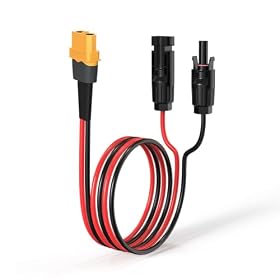
Do not connect a solar panel unless its voltage and current fall within the power station's documented input range. A panel with a higher advertised wattage is not automatically compatible. Follow the manufacturer's wiring and weather guidance.
Cost and ownership trade-offs
Compare the complete system cost rather than battery capacity alone. Two 1kWh units may require two chargers, two solar inputs, additional cables, and more storage space. One 2kWh unit may require a heavier-duty cart, longer extension cable, or a larger solar array to recharge within your target time.
Also consider warranty handling and replacement. Two units provide some functional redundancy, but they also create two batteries, two inverters, and two sets of electronics to maintain. If one 1kWh unit fails, you still have the other; if the single 2kWh unit fails, your entire backup capacity is unavailable.
A practical decision checklist
Choose two 1kWh units when most of these statements are true:
You regularly move power between locations.
You want independent backup options.
Your loads can be split between separate outlets and inverters.
You already own one compatible 1kWh unit.
You have enough charging equipment or time to recharge both.
No single appliance requires more output than either unit can provide.
Choose one 2kWh unit when most of these statements are true:
Your main goal is one central outage battery.
You want to run several devices from one station.
You need the simplest possible setup.
A refrigerator or other motor load is a priority.
You prefer one charging system and one battery display.
The larger unit meets your required continuous and surge output.
Bottom line
Two 1kWh portable power stations can be a smart purchase for portability, separate-use flexibility, and basic redundancy. One 2kWh unit is usually the cleaner choice for centralized backup, shared inverter capacity, and simpler operation. Compare usable capacity, continuous output, surge capability, charging input, weight, and supported linking features before treating the two configurations as equivalent.
FAQ
Do two 1kWh power stations equal one 2kWh power station?
They may provide roughly similar total nominal battery energy, but they are still separate systems unless the manufacturer supports parallel operation. Their inverter output, charging speed, outlets, and usable capacity may differ.
Can I connect two portable power stations together?
Only use a connection method explicitly approved by the manufacturer. Do not connect their AC outputs together with a power strip, extension cord, or improvised cable.
Are two 1kWh units better for refrigerator backup?
They can offer redundancy and portability, but one 2kWh unit is often simpler for a refrigerator and other shared loads. In either case, verify continuous output and starting or surge capability against the refrigerator's requirements.
Is one 2kWh unit heavier than two 1kWh units?
Often, a 2kWh unit is heavier as a single object, but total system weight depends on the specific models and accessories. Compare listed unit weight, charger weight, handles, and storage requirements.
What should I compare besides watt-hours?
Compare usable capacity, continuous AC output, surge output, charging input, solar compatibility, weight, outlet configuration, supported expansion or parallel operation, warranty, and whether the unit can run your intended loads simultaneously.