DC fridge versus running an AC fridge through the inverter
A DC fridge usually wastes less stored energy because it avoids the power station’s AC inverter, but an AC refrigerator may be the more practical choice if you already own one. The right option depends on daily watt-hours, startup requirements, DC output limits, and how long you need refrigeration during an outage or trip.
What do you need help with?
Open an answer, or tell us what we should cover next.
Answered in this guide
Choose between a DC fridge and an AC fridge
A DC fridge usually saves stored energy by avoiding inverter losses, while an AC fridge is often more practical if you already own one or need household capacity. The best choice depends on runtime, startup demands, output limits, and how you plan to use it.
A DC compressor fridge generally uses fewer watt-hours from the power station than a similar AC fridge because the AC option also loses energy through the inverter. A simple runtime estimate can help compare expected operating time.
Check whether a fridge works with your power station
For a DC fridge, match the voltage, connector, polarity, and port current limit. For an AC fridge, check continuous output, compressor startup surge, and suitable waveform so the power station can run the appliance safely.
Understand the startup needs of an AC refrigerator
An AC refrigerator can draw a brief surge when its compressor starts. The power station therefore needs enough continuous AC output and surge capability, with pure sine wave output being the conservative choice for reliable operation.
Request a topic and help us choose what to build next.
Size a power station for a specific refrigerator
Measure a refrigerator’s running and startup watts
Keep a refrigerator running while the station recharges
Requests help us prioritize the next guide. No email required.
One anonymous request per topic.
A DC fridge is usually more efficient with a portable power station because it can use the station’s DC output without first converting battery power to AC. An AC refrigerator, however, may be easier to use if you already own one and can provide more capacity for a household outage. Compare the two by looking at total watt-hours, compressor startup power, output compatibility, and required runtime—not just the fridge’s running watts.
The basic difference
A DC fridge is designed to run from a 12- or 24-volt DC source, such as a vehicle battery, dedicated battery system, or compatible portable power station DC port. The power station does not need to turn its stored DC power into household AC first.
An AC fridge uses a standard household plug. When it runs from a portable power station, the station’s inverter converts battery power to AC. That conversion uses additional energy, and the inverter must handle the compressor’s startup demand.
The practical chain looks like this:
DC fridge: power station battery → DC output → fridge
AC fridge: power station battery → AC inverter → refrigerator plug
The shorter DC path can improve runtime, but compatibility is essential.
Which one uses less power?
In most comparable situations, a DC compressor fridge uses less energy from the power station because it avoids inverter overhead. An AC refrigerator can still be efficient at the appliance level, but the power station must keep its inverter operating while the refrigerator is connected.
Whether the power station’s DC output is regulated and suitable for the fridge
Do not compare only the label wattage. Refrigerators cycle on and off, so the important number is their energy use over time, expressed in watt-hours (Wh).
A simple runtime estimate
Use this general calculation:
Estimated runtime in hours = usable power-station watt-hours ÷ appliance watt-hours per hour
If you know the refrigerator’s daily energy use, use this version instead:
Estimated days = usable power-station watt-hours ÷ daily refrigerator watt-hours
For an AC refrigerator, reduce the usable battery figure to account for inverter losses and the inverter’s own consumption. For a DC fridge, account for losses in the power station’s DC conversion and any adapter or cable.
For example, a refrigerator that averages 60 watts while operating continuously would theoretically use 1,440 Wh in 24 hours. Actual daily energy use may be lower if the compressor cycles off, but hot conditions, frequent opening, and warm food can increase consumption. Treat examples as sizing methods, not guaranteed runtime.
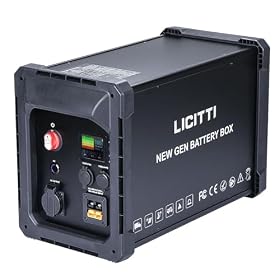
Portable power station with suitable AC inverter for a refrigerator
Product prices and availability are accurate as of the date/time indicated and are subject to change. Any price and availability information displayed on Amazon.com at the time of purchase will apply to the purchase of this product.
DC fridge advantages
Better use of stored battery energy
A compatible DC fridge can bypass the AC inverter. This generally reduces conversion losses and avoids leaving a larger inverter running just to supply a small appliance.
Lower inverter requirements
The power station does not need to provide a high continuous AC output or a large AC surge rating. This can make a smaller station practical, provided its DC port can deliver the required voltage and current.
Useful for camping and vehicle travel
DC compressor fridges are commonly designed for mobile use. They may support 12V or 24V input and can be connected to a suitable vehicle or power-station outlet.
Potentially longer runtime
When the fridge’s DC input matches the power station, the reduced conversion path can provide more usable runtime from the same battery capacity.
Product prices and availability are accurate as of the date/time indicated and are subject to change. Any price and availability information displayed on Amazon.com at the time of purchase will apply to the purchase of this product.
DC fridge drawbacks
Port compatibility can be complicated
A power station may have several types of DC outputs, including a regulated car-style socket, USB-C output, barrel connector, or proprietary port. The voltage, current limit, connector size, and polarity must all match the fridge requirements.
Do not assume that any 12V-looking outlet is suitable. Check both manuals before connecting the appliance.
DC ports may have lower output limits
Some power stations provide much less power through their DC ports than through AC outlets. A fridge that is compatible in voltage may still exceed the port’s current limit during startup or normal operation.
Less useful outside mobile refrigeration
A dedicated DC fridge is efficient for travel and backup cooling, but it does not replace a full-size household refrigerator for everyday storage. Capacity, freezer space, and temperature recovery may be limited by the fridge design.
AC fridge advantages
You can use the refrigerator you already own
For an outage, an AC refrigerator is often the practical choice because it is already installed and sized for household use. You do not need to purchase a separate DC fridge just to use a portable power station as backup.
Easy connection
If the power station has a suitable AC outlet, a refrigerator can usually be connected with its normal power cord. The connection is simpler than selecting a compatible DC cable and checking voltage and polarity.
More capacity and familiar performance
A household AC refrigerator may offer substantially more fresh-food and freezer capacity than a portable DC fridge. It may also be better suited to maintaining normal household temperatures during a longer outage.
AC fridge drawbacks
The inverter must handle compressor startup
Refrigerator compressors can draw a brief surge when starting. The power station needs enough continuous AC output and enough surge capability for the specific refrigerator. A unit that appears adequate based only on running watts may shut down when the compressor starts.
Manufacturers do not always express startup behavior in the same way, so check the refrigerator and power-station documentation. If possible, use measured startup and energy data from a suitable power meter rather than relying on a generic multiplier.
Inverter losses reduce runtime
The AC inverter consumes energy even when the refrigerator is not actively cooling. Some inverters also have a minimum idle draw. This matters more when the refrigerator cycles infrequently or has low average consumption.
Pure sine wave output is the conservative choice
For a compressor appliance, use a portable power station with the output waveform recommended by the refrigerator and power-station manufacturers. A pure sine wave inverter is generally the safer choice for sensitive motors and compressor equipment. Do not assume an inexpensive or modified-wave output is suitable.
Which option is better for an outage?
Choose the AC refrigerator when:
You need to keep an existing household refrigerator running.
You need larger fresh-food or freezer capacity.
The power station has adequate continuous and surge AC ratings.
You can recharge the station with solar, a vehicle, or another approved source.
Shorter runtime is acceptable, or you have enough battery capacity.
Choose a DC fridge when:
You are buying a refrigeration system specifically for camping or travel.
Long runtime from a limited battery is the priority.
You can verify the DC voltage, connector, polarity, and current requirements.
The fridge’s capacity is sufficient for your needs.
You want to avoid keeping a large AC inverter active.
For a short outage, using an existing AC refrigerator may be more economical than buying a DC fridge. For repeated camping trips or extended off-grid use, a compatible DC fridge can make better use of each watt-hour.
How to check compatibility before buying
For a DC fridge
Verify all of the following:
Nominal voltage: The fridge’s required voltage must match the power station’s DC output range.
Maximum current: The port must support the fridge’s startup and operating current.
Connector and polarity: The plug must physically fit and be wired correctly.
Regulation: Confirm whether the output is regulated. Some vehicle-style outlets vary with battery voltage.
Low-voltage behavior: Check whether the fridge or power station shuts down early to protect the battery.
Cable length and gauge: Use the manufacturer-approved cable or an appropriately rated replacement.
For an AC fridge
Check:
Continuous AC output rating: It must exceed the refrigerator’s expected operating demand.
Surge or peak rating: It must accommodate compressor startup.
Waveform: Follow the refrigerator manufacturer’s requirements; pure sine wave is the conservative choice.
Energy consumption: Use the refrigerator’s documented daily or annual energy figure when available.
Power-station battery capacity: Size for the required outage duration, recharge losses, and other loads.
Do not connect a power station to a home wall outlet or electrical panel to energize household circuits unless the system is specifically designed and installed for that purpose. Backfeeding can seriously injure utility workers and damage equipment. Use approved transfer equipment and a qualified electrician for whole-home backup.
Ways to improve either setup
Cool the refrigerator before an expected outage when possible.
Keep the doors closed and place the appliance away from heat and direct sun.
Avoid adding large amounts of warm food while operating from battery power.
Turn off unnecessary AC loads so the inverter is not carrying extra demand.
Keep the power station’s ventilation openings clear.
Recharge during the day if using solar, but follow the station’s input limits and operating instructions.
For a DC fridge, use the shortest practical cable and the manufacturer-recommended connection.
Bottom line
A compatible DC fridge normally provides better battery efficiency because it avoids the portable power station’s AC inverter. It is the stronger choice for camping, vehicle travel, and long-duration refrigeration from a limited battery.
An AC refrigerator is often the better outage solution when you already have one and need household capacity. Choose a power station with suitable continuous output, compressor-starting capability, pure sine wave AC, and enough watt-hours for the expected runtime. The most reliable decision comes from comparing measured or documented daily energy use—not from comparing running watts alone.
FAQ
Is a DC fridge more efficient than an AC fridge on a portable power station?
Usually, yes. A compatible DC fridge can avoid the power station’s AC inverter and its idle and conversion losses. The actual difference depends on the fridge, power station, temperature, and operating conditions.
Can I run a regular refrigerator from a portable power station?
Often, but the power station must have adequate AC continuous output, compressor startup capability, battery capacity, and a suitable waveform. Check both manufacturers’ specifications before relying on the setup during an outage.
How many watts does a refrigerator need to start?
There is no universal startup figure. Compressor behavior varies by refrigerator and operating conditions. Use the refrigerator documentation or measure the startup demand with equipment designed for that purpose, then compare it with the power station’s surge rating.
Can I plug a 12V fridge into any portable power station?
No. Match the fridge’s voltage, current requirement, connector, polarity, and cable to the power station’s DC output. Also verify whether the port is regulated and whether its current limit can handle startup.
Does a portable power station need pure sine wave output for a refrigerator?
For an AC refrigerator, follow the appliance and power-station instructions. Pure sine wave output is the conservative choice for compressor appliances and avoids compatibility concerns associated with lower-quality waveforms.