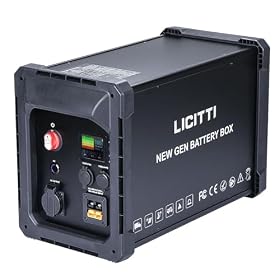
To run a refrigerator overnight, choose a portable power station based on the fridge’s measured energy use, startup surge, and the station’s usable battery capacity—not just its advertised wattage.
Power station that can run a fridge overnight
Yes, a portable power station can run a fridge overnight, but the right size depends on the refrigerator’s actual energy use, compressor startup surge, and how much battery capacity remains usable after inverter losses. For most situations, focus on usable watt-hours (Wh) first, then confirm the station has enough continuous and surge output for the compressor.
How much power does a fridge need overnight?
A refrigerator does not draw its maximum running wattage continuously. Its compressor cycles on and off, so total energy use is better expressed in watt-hours than in watts.
The fridge’s label may show running amps or watts, but that number alone does not tell you how much energy it will use over 8 to 12 hours. Temperature, room conditions, door openings, frost buildup, and the refrigerator’s efficiency all affect consumption.
The most reliable approach is to measure the refrigerator with a plug-in electricity meter for at least 24 hours. Then calculate the overnight requirement:
Overnight energy use = daily energy use × overnight hours ÷ 24
For example, if a refrigerator measures 1,200 Wh over 24 hours, an eight-hour overnight period would theoretically require about 400 Wh. Because a power station loses energy through its inverter and should not normally be drained completely, choose substantially more capacity than that calculated minimum.
If you cannot measure the fridge, use the appliance’s energy guide or manufacturer documentation as a starting point, then add a practical reserve. Estimates are less dependable than a real measurement, especially for older refrigerators, garage refrigerators, and units with ice makers or large freezers.
A practical sizing method
Use these steps before buying:
Find the fridge’s daily energy use in Wh. Check its energy label, manual, or measure it with a plug-in meter.
Convert that figure to the number of hours you need. An overnight period is commonly 8 to 12 hours.
Allow for inverter losses. The station must supply AC power from its battery, and that conversion is not 100% efficient.
Add a reserve. Extra capacity helps account for colder weather, door openings, compressor cycling, and battery protection limits.
Check output ratings. The station must handle both normal operation and the compressor’s brief startup demand.
The manufacturer may publish usable capacity, efficiency information, or estimated runtime. If it lists only the battery’s nominal capacity, expect the usable AC runtime to be lower.
Why a larger battery may be worthwhile
A station that barely covers the calculated overnight load can shut down before morning if the refrigerator uses more energy than expected. A larger battery also leaves capacity for phone chargers, lights, a modem, or medical equipment.
For emergency backup, avoid sizing the station so the fridge consumes nearly all of its capacity. Keeping reserve capacity is more useful than choosing the smallest unit that works under ideal conditions.
Product prices and availability are accurate as of the date/time indicated and are subject to change. Any price and availability information displayed on Amazon.com at the time of purchase will apply to the purchase of this product.
Check the refrigerator’s startup surge
The compressor can briefly draw more power when it starts than it uses while running. This is called startup surge or peak demand.
Compare the refrigerator’s starting requirement with both of the power station’s ratings:
Continuous output: The AC output the station can provide for ongoing loads.
Surge or peak output: The short-term output available when a motor or compressor starts.
A station can have enough watt-hours but still fail to start the refrigerator if its inverter cannot handle the compressor’s surge. Look for a manufacturer-approved starting or peak rating that is suitable for motor-driven appliances. Do not assume that a high battery capacity automatically means a high surge capability.
If the fridge repeatedly clicks, starts and stops, displays an overload warning, or causes the station to shut off, disconnect it and check the station’s output limits. Repeated failed starts are not a safe operating condition.
Product prices and availability are accurate as of the date/time indicated and are subject to change. Any price and availability information displayed on Amazon.com at the time of purchase will apply to the purchase of this product.
Features that matter for fridge backup
Pure sine wave AC output
A pure sine wave inverter is the conservative choice for refrigerators and other motor-driven appliances. It provides AC power more like utility power than modified-sine output. Follow the refrigerator and power station manufacturers’ compatibility guidance.
Low-load and idle consumption
The station itself uses some energy while its AC inverter is enabled. That overhead matters more for a small fridge or a long outage. A station’s advertised battery capacity is not the same as the energy available to the refrigerator.
Pass-through charging or backup mode
Some stations can power connected devices while charging. Others have a dedicated backup or UPS-style mode. These features vary in transfer time, operating limits, and compatibility.
Do not assume a portable power station is suitable for permanent refrigerator backup. If the fridge must remain powered without interruption, check the station’s transfer behavior and the refrigerator manufacturer’s guidance. A permanently installed backup system may be more appropriate.
Battery chemistry and operating conditions
Battery type affects weight, service life, charging behavior, and temperature limits. Read the manufacturer’s minimum and maximum operating temperatures, especially if the station will be stored in a garage, vehicle, or unheated area.
Do not charge or operate the station outside its specified temperature range. Keep ventilation openings clear and protect the unit from moisture.
Product prices and availability are accurate as of the date/time indicated and are subject to change. Any price and availability information displayed on Amazon.com at the time of purchase will apply to the purchase of this product.
How to connect the fridge safely
Plug the refrigerator directly into the station’s AC outlet unless the manufacturer specifically supports another connection method.
Use the correct grounded cord and avoid undersized extension cords.
Do not connect a portable power station to a home wall outlet or backfeed household wiring.
Never use a homemade transfer connection. A transfer switch installed by a qualified electrician is required for connecting equipment to building circuits.
Keep the refrigerator closed during an outage. Door openings increase recovery time and energy use.
Place the power station where it has adequate ventilation and cannot be exposed to spills or condensation.
If the refrigerator contains temperature-sensitive medication or food, use an independent temperature-monitoring plan. A power station’s runtime estimate is not a guarantee that the appliance will remain within a particular temperature range.
What size should you consider?
There is no universal battery size that guarantees an overnight run because refrigerators vary widely. As a buying rule, calculate the measured overnight Wh requirement, account for conversion losses, and choose the next practical capacity class with reserve room.
A small station may work for a measured low-consumption refrigerator over a short overnight period, but it leaves less margin for surge demand and unexpected cycling. A mid-size or larger station is more suitable when the fridge is older, used in a warm garage, opened frequently, or expected to run through a longer outage.
If you also need to power lights, internet equipment, fans, or medical devices, add those loads to the battery calculation rather than treating the refrigerator’s requirement as the total.
Solar panels and recharging during an outage
Solar charging can extend runtime, but it does not replace the need for adequate overnight battery capacity. Solar production changes with weather, shade, panel angle, season, and the station’s solar-input limits.
Before pairing panels with a station, verify:
The panels’ voltage and current fall within the station’s solar-input range.
The combined panel output does not exceed the station’s input limit.
The required connectors and polarity are compatible.
The station can charge while powering the refrigerator if that is part of your plan.
For a multi-day outage, calculate the energy the panels can realistically restore during daylight and compare it with the fridge’s daily consumption. Manufacturer instructions take priority over generic solar wiring advice.
When a power station is not the best solution
A portable station may be inconvenient if the refrigerator needs to run for many days, the station must be recharged frequently, or the appliance has a particularly demanding compressor. In those cases, consider a larger battery system, a properly installed generator setup, or another backup solution designed for continuous operation.
A replacement station is reasonable when the current unit has insufficient usable Wh, inadequate surge output, an incompatible inverter waveform, or a battery that has lost significant capacity. Do not open or repair a high-voltage battery pack yourself; contact the manufacturer or a qualified service professional.
FAQ
Can a 500Wh power station run a refrigerator overnight?
It may, but the answer depends on the refrigerator’s measured overnight energy use, inverter losses, compressor surge, and the station’s usable capacity. Measure the fridge when possible and keep reserve capacity instead of assuming the full advertised 500 Wh is available at the AC outlet.
What power station size is best for a refrigerator?
Choose based on usable watt-hours for the required runtime and verify both continuous and surge output. A larger capacity is preferable when the fridge is older, operates in a hot space, runs for more than one night, or must share power with other devices.
Will a power station damage a refrigerator?
A properly sized station with a compatible pure sine wave inverter should be the conservative choice, but compatibility is not guaranteed for every appliance. Follow both manufacturers’ instructions and stop using the setup if the station reports overloads or the refrigerator repeatedly fails to start.
Can I leave a refrigerator plugged into a power station while the station charges from solar panels?
Some stations support simultaneous charging and AC output, while others have limits or do not support it. Check the station’s charging, pass-through, solar-input, and operating-temperature specifications before relying on this arrangement.