The best portable power station for a van with a roof panel is one that matches the panel’s voltage and wattage, provides enough usable battery capacity for your loads, and supports the charging methods you actually need. Use this guide to size the station before buying.
A good portable power station for a van with a roof panel must do more than store energy. It needs a solar input compatible with the panel, enough usable capacity for your fridge and other devices, an inverter that can handle startup loads, and a practical way to recharge when sunlight is limited. Start by sizing your daily energy use, then compare solar-input limits, battery chemistry, output ports, and physical installation concerns.
Start with your van’s power requirements
List the appliances you expect to run and estimate their watt-hours (Wh) per day. Watt-hours are more useful than watts for sizing the battery because they describe energy consumption over time.
Use this basic calculation for each appliance:
watts × hours of use = watt-hours
For a compressor fridge, use its average consumption if the manufacturer provides it rather than multiplying its running wattage by 24 hours. A fridge cycles on and off, and its actual use varies with ambient temperature, thermostat settings, ventilation, and how often the door opens.
Also account for:
LED lights
Phones, tablets, cameras, and laptops
A roof vent fan
Water pumps
Internet equipment
Cooking appliances
Medical or other essential equipment
Add the daily totals and leave a reserve. Inverter losses and charging losses mean the full battery rating is not available to your devices. If you want the station to carry the van through cloudy weather or several nights without useful solar, choose more capacity rather than sizing only for an average sunny day.
Choose battery capacity based on autonomy
Portable power station capacity is normally listed in watt-hours. A smaller station may work for a fridge, lights, and electronics during a short trip, while a larger unit is more appropriate when you need overnight operation, cloudy-day backup, or high-wattage appliances.
Think in terms of autonomy:
One night: Size for one evening and overnight, with some reserve.
One cloudy day: Add enough capacity to cover reduced solar production.
Several days off-grid: Battery capacity becomes more important than peak inverter wattage.
Do not judge a station only by its advertised battery capacity. Check whether the manufacturer specifies usable capacity, the battery’s recommended discharge limits, and the expected operating conditions.
LiFePO4 versus other battery chemistries
Many newer stations use lithium iron phosphate, or LiFePO4, batteries. They are often selected for longer cycle life and improved thermal stability compared with some other lithium chemistries. They can also be heavier or more expensive for a similar capacity.
Whatever the chemistry, follow the manufacturer’s temperature, charging, storage, and ventilation instructions. Do not leave a station in a hot van if the manual prohibits it. Extreme heat can shorten battery life, and some batteries should not be charged below freezing.
Product prices and availability are accurate as of the date/time indicated and are subject to change. Any price and availability information displayed on Amazon.com at the time of purchase will apply to the purchase of this product.
Match the roof panel to the station’s solar input
The roof panel and power station must be electrically compatible. Check these specifications on both products before connecting them:
Maximum solar-input voltage
Acceptable solar-input current
Maximum solar-input wattage
Connector type and polarity
Whether the station uses an MPPT solar charge controller
The panel’s open-circuit voltage, or Voc, must stay below the station’s maximum input voltage. This is especially important in cold conditions, when panel voltage can rise. Do not exceed the station’s voltage or current limits just because the panel’s nominal wattage appears suitable.
A panel may be rated at a higher wattage than the station can accept. In that case, the station will generally limit the incoming power, but only if the panel’s voltage and current remain within the permitted ranges. Confirm this in the manuals rather than assuming that wattage alone determines compatibility.
Fixed roof panels need careful cable planning
A roof-mounted panel usually connects to the station through a cable routed into the van. Plan for:
Weatherproof entry through the roof
Strain relief so the cable cannot pull on the connector
Protection from sharp edges and chafing
Correct connector polarity
A way to disconnect the panel for service
Use outdoor-rated cable and an appropriately sealed roof gland or entry system. If you are drilling through the roof or modifying the van’s electrical system, follow the vehicle and panel manufacturer’s instructions. A qualified installer is appropriate when you are unsure about sealing, fusing, grounding, or cable sizing.
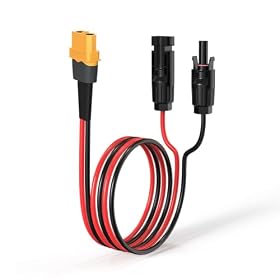
Solar cable for connecting a roof panel to a power station
Product prices and availability are accurate as of the date/time indicated and are subject to change. Any price and availability information displayed on Amazon.com at the time of purchase will apply to the purchase of this product.
Check the station’s inverter output
The inverter converts the battery’s DC power into household AC power. Compare both continuous output and surge output with the devices you plan to operate.
A compressor fridge can draw more power briefly when its compressor starts. The station needs to tolerate that startup surge, not just the fridge’s normal running wattage. Other demanding loads include:
Coffee makers
Toasters
Induction cooktops
Hair dryers
Heaters
Power tools
High-wattage heating appliances can drain a battery quickly even when the inverter can run them. For a van setup, a station with a strong inverter is useful only if the battery and solar system can replenish the energy those loads consume.
If the station will power sensitive electronics, look for a pure sine wave inverter where required by the equipment manufacturer. Also check whether the AC outlets remain active when the station is charging and whether the unit’s pass-through or UPS mode has limitations.
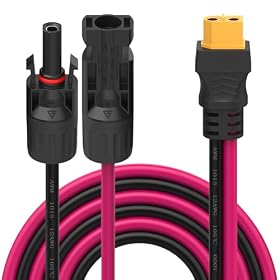
Vehicle charging cable for a portable power station
Product prices and availability are accurate as of the date/time indicated and are subject to change. Any price and availability information displayed on Amazon.com at the time of purchase will apply to the purchase of this product.
Consider DC outputs for a more efficient van setup
Whenever possible, run compatible devices directly from DC outputs instead of using AC power and then converting back to DC. Each conversion consumes energy.
Useful outputs may include:
USB-C for laptops and phones
USB-A for smaller electronics
A regulated 12-volt output for compatible devices
A vehicle-style accessory socket
Check the voltage, current, and connector requirements of the fridge or other DC appliance. Do not assume that every “12V” outlet is regulated or suitable for every device. Some stations shut off low-power loads automatically, which can be a problem for equipment that draws very little current. Look for an adjustable low-power or always-on mode if the manufacturer offers one.
Solar input speed matters more than the panel’s label
A large roof panel does not guarantee fast charging. The station’s maximum solar-input wattage determines how much of the panel’s potential it can use. Shade, roof angle, dirt, wiring losses, clouds, and heat can reduce actual production.
For a useful van system, compare:
The panel’s rated wattage.
The station’s maximum solar-input wattage.
The time available for sunlight each day.
Your estimated daily energy use.
If your daily consumption is close to or greater than what the roof panel can typically replace, plan a backup charging method. That might be shore power, a compatible car charger, or an approved DC-to-DC charging setup. Do not connect a vehicle electrical system directly to a power station unless the station and cable are designed for that connection.
Van-specific features that affect the choice
A station that works well in a house may be inconvenient in a van. Consider:
Size and weight
Measure the storage location, including clearance for cables, ventilation, and access to the power button. A larger battery can provide useful autonomy but may be difficult to move or secure.
Heat and ventilation
Leave the clearances specified by the manufacturer. Do not cover ventilation openings or place the station beside a heat-producing appliance. A closed cabinet can trap heat and reduce performance or battery life.
Mounting and movement
Portable stations are not automatically designed for permanent vehicle mounting. Secure the unit against movement while driving, but do not block vents or create pressure on its ports. If a station is not approved for a particular mounting position, store it where it cannot become a projectile during sudden braking.
Charging while driving
Check whether the station supports vehicle charging and what cable or input it requires. A basic 12V accessory outlet may charge slowly or be limited by the vehicle circuit. For faster charging, use only a manufacturer-approved charging method and appropriate protection.
Cold-weather operation
Battery charging restrictions can apply in freezing temperatures. If the station has low-temperature protection or internal heating, understand how it works. Otherwise, keep the battery within the specified temperature range before charging.
A practical buying checklist
Before choosing a station, confirm that:
Its usable capacity covers your expected daily load with reserve.
Its solar-input voltage is higher than the panel’s operating voltage but safely above the panel’s maximum Voc.
Its solar-input wattage and current limits suit the roof panel.
Its inverter handles the startup surge of the fridge and any other AC appliances.
It has the DC and USB outputs your devices need.
It supports your backup charging method.
It fits the intended location with ventilation and cable clearance.
Its temperature and mounting instructions work for your van.
Replacement cables, adapters, and service parts are available.
The best station is not necessarily the largest one. For many van owners, the right choice balances enough overnight capacity with a solar input that can make meaningful use of the roof panel. If the panel, battery, and charging method are mismatched, increasing inverter wattage alone will not solve the problem.
FAQ
How large should a portable power station be for a van fridge?
Estimate the fridge’s daily watt-hour consumption, add your other loads, and include reserve for inverter and charging losses. Choose additional capacity if you need to cover cloudy weather or multiple nights without dependable solar.
Can I connect any roof solar panel to a portable power station?
No. The panel’s open-circuit voltage, current, wattage, connector, and polarity must all be compatible with the station’s solar input. Never exceed the station’s maximum input voltage or current.
Is a pure sine wave inverter important in a van?
It can be important for equipment that requires clean AC power, and it is a sensible choice when the manufacturer specifies it. Also compare continuous and surge output because compressor fridges and motor-driven devices can need extra power at startup.
Can I leave a portable power station in a van?
Only if the station’s instructions permit the expected temperature, moisture, and mounting conditions. Protect it from extreme heat, freezing temperatures, water, and movement, and keep its ventilation openings clear.