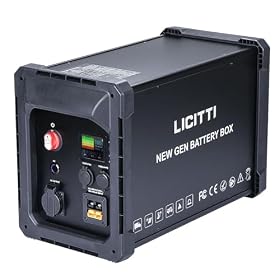
If an inverter clips, shuts off, or beeps when you connect a 1500W heater, it is usually detecting an overload, low battery voltage, excess heat, or a problem with the heater or connection. A 1500W heater needs more than a power station advertised with 1500W peak output.
A 1500W heater can make an inverter clip or shut down because it needs about 1,500 watts continuously—12.5 amps from a 120-volt outlet—while the inverter also needs operating headroom. A power station rated at 1,500W peak but less than 1,500W continuous is not suitable. Even a unit with a 1,500W continuous rating may trip when its battery is low, its inverter is hot, or the heater and cord cause a poor connection.
What “clipping” usually means
In this situation, clipping normally means the inverter is limiting output or activating protection. Depending on the power station, you may see an overload warning, a flashing output indicator, a beep, reduced output, or an automatic shutdown.
A 1500W resistive heater usually does not have a large startup surge like a refrigerator compressor. However, its heating element may draw close to the full nameplate load continuously. Models with a fan, electronic controls, or multiple heat settings can add a small amount of load.
Check the heater and its airflow first
Turn off the heater and disconnect it from the power station.
Check the heater’s intake and exhaust openings for dust, fabric, or other obstructions.
Clean the intake filter if the manufacturer permits it. A restricted fan can cause overheating and may make the heater shut down or behave abnormally.
Inspect the heater plug and cord for looseness, melting, discoloration, or damage. Do not use a damaged heater or cord.
Try the lowest heat setting. If the inverter runs the heater at a lower setting but clips at full power, the load is exceeding the available continuous output or thermal capacity.
Keep the heater on a firm, nonflammable surface with clear space around its air openings. Do not cover it or operate it near curtains, bedding, paper, or other combustible materials.
Product prices and availability are accurate as of the date/time indicated and are subject to change. Any price and availability information displayed on Amazon.com at the time of purchase will apply to the purchase of this product.
Verify the power station’s real output rating
Look for the continuous AC output, not only the surge, peak, or boosted rating. A power station labeled “1500W peak” may deliver substantially less continuously and will not reliably run a 1500W heater.
For a 1500W heater, a practical choice is an inverter with continuous AC output above 1500W, with additional headroom for heat, battery voltage sag, and any other connected load. Do not assume an advertised “boost” mode makes the station suitable for continuous heating; some boost modes reduce voltage or are intended only for certain appliance types.
Also check the power station’s AC outlet limit. A unit may have a high total inverter rating but a lower rating for one outlet or one group of outlets.
Product prices and availability are accurate as of the date/time indicated and are subject to change. Any price and availability information displayed on Amazon.com at the time of purchase will apply to the purchase of this product.
Check the connection and setup
Use the heater directly in the power station’s AC outlet while troubleshooting. Avoid power strips, plug adapters, extension cords, and daisy chains until you know the system works. A long or undersized extension cord can cause voltage drop and extra heating.
Confirm that:
The AC output is switched on.
The power station is not in an energy-saving mode that turns off under changing loads.
No other high-wattage device is connected.
The heater is set to the intended heat level.
The power station is sitting where its cooling vents are unobstructed.
The inverter is not being used in a location hotter than the manufacturer allows.
Do not connect a 1500W heater to a DC output, car outlet, or improvised inverter cable unless the manufacturer specifically supports that setup. Use the heater’s original plug and the power station’s properly rated AC output.
Check battery charge and temperature
A low battery can cause the internal voltage to sag under a heavy load. The inverter may then trip even though the station’s headline wattage appears sufficient. Recharge the power station according to its instructions and test again with the heater alone.
An inverter that has already been running near its limit may also shut down from heat. Let the power station cool, move it away from direct sun and other heat sources, and keep its vents clear. Do not place it inside a closed vehicle compartment or enclosed box while it is delivering high power.
If the station is cold, extremely hot, or displaying a temperature warning, follow the manufacturer’s operating-temperature guidance before trying again.
Estimate how long the heater can run
A heater uses energy very quickly. A rough runtime estimate is:
For example, a 1,000Wh station might provide roughly 30 to 40 minutes at full heat after accounting for conversion losses and the portion of the battery that is not usable. The actual time varies by battery condition, temperature, inverter efficiency, and the heater’s duty cycle.
An extra battery can extend runtime when the power station supports one, but it does not necessarily increase the inverter’s maximum output. An expansion battery will not solve clipping caused by a 1500W inverter limit.
When the power station may be the problem
If the heater works normally from a household outlet, the station is fully charged and cool, the AC output rating is comfortably above 1500W, and no other load is connected, the power station may have an inverter, outlet, or control fault.
Stop using the AC output if it repeatedly trips, smells hot, makes unusual noises, shows melted plastic, or displays a persistent fault code. Do not open the power station or bypass its protection circuits. Contact the manufacturer or a qualified technician, especially if the unit is under warranty.
A replacement power station is reasonable when the existing unit is below the heater’s continuous requirement, has an aging battery that causes voltage sag, or repeatedly overheats under a load it should support. Choose based on continuous AC output, outlet rating, battery capacity, cooling requirements, and the manufacturer’s guidance for resistive heating loads—not peak wattage alone.
FAQ
Can a 1500W heater run on a 1500W power station?
It may run if the station’s AC inverter is rated for at least 1500W continuous output and the battery is sufficiently charged, but there is little headroom. A station with higher continuous output is a safer choice for sustained heating.
Why does my inverter clip even though it says 2000W?
The displayed rating may refer to surge or a special boost mode rather than continuous AC output. Other causes include a low battery, excessive heat, another connected load, a restricted heater, a damaged cord, or a malfunctioning inverter.
Will an expansion battery stop the inverter from clipping?
Usually not when clipping is caused by exceeding the inverter’s wattage limit. An expansion battery generally adds runtime; it does not automatically increase the AC inverter’s maximum output.
Is a 1500W heater safe to run from a portable power station?
Only if the power station and heater are approved for that use and the station’s continuous AC output, outlet, temperature, and ventilation requirements are met. Follow both manufacturers’ instructions and keep the heater away from combustible materials.