A portable power station is generally the quieter choice for backup power in a neighborhood. It has no gasoline engine or exhaust, so it can power phones, lights, routers, medical equipment, and many refrigerators without the steady mechanical noise of a fuel generator. The main tradeoff is that its battery eventually runs down, while a generator can continue operating as long as it has fuel.
Comparisons · Mon Sep 07
Quiet Operation Versus a Generator in a Neighborhood
A portable power station is usually much quieter than a fuel generator, making it better suited to close neighbors, apartments, and overnight outage use. The tradeoff is limited battery runtime and output compared with a generator that can keep running while fuel is available.
Portable power station versus generator noise
A portable power station produces no engine noise when its inverter is operating within normal limits. You may hear cooling fans, especially when the unit is powering a heavy load, charging, or operating in warm conditions. The noise level varies by design and load, so check the manufacturer's published specifications if quiet operation is a priority.
A conventional portable generator has several noise sources:
- The gasoline or propane engine
- The exhaust system
- Cooling airflow
- Vibration transmitted through the frame or ground
An inverter generator may be quieter than a conventional generator because it can adjust engine speed to the electrical load, but it still has a running engine and exhaust. In a closely spaced neighborhood, the difference can be noticeable, particularly at night.
Quiet outage backup for a refrigerator and essential electronics
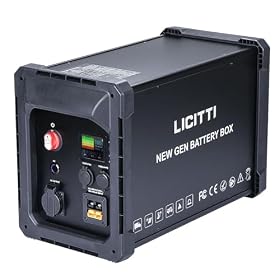 Licitti 2000W AC Aluminum Power Station Hub with Pure Sine Wave Inverter - DIY Portable…Generic
$426.00 as of
View on Amazon
Product prices and availability are accurate as of the date/time indicated and are subject to change. Any price and availability information displayed on Amazon.com at the time of purchase will apply to the purchase of this product.
When a portable power station is the better neighborhood choice
A battery power station is usually the better fit when you need quiet, short-duration backup power rather than whole-home operation.
It is well suited to:
- Refrigerators and freezers during shorter outages
- Wi-Fi routers and networking equipment
- Phones, laptops, and tablets
- LED lights
- CPAP machines and other approved low-power medical equipment
- Television and small electronics
- Apartment or townhouse use where fuel storage is difficult
- Overnight operation when engine noise would disturb nearby homes
Because there is no combustion, a portable power station does not produce carbon monoxide. However, it is still an electrical device with a battery, inverter, and charging system. Keep it dry, provide the ventilation required by the manufacturer, and stop using it if the case becomes unusually hot, swollen, damaged, or wet.
Solar charging for extended quiet backup
 Renogy 100W Portable Solar Panel, 25% High Efficiency Solar Panel Kit with 20A Charger Controller…Renogy
$229.30 as of
View on Amazon Anker 521 Portable Power Station Upgraded with LiFePO4 Battery, 256Wh 6-Port Powerhouse, 300W (Peak 600W)…Anker
$259.99 as of
View on Amazon SOLPERK Solar Panel Kit 20W 12V Solar Battery Charger Maintainer+ControllerSOLPERK
$34.99 as of
View on Amazon
Product prices and availability are accurate as of the date/time indicated and are subject to change. Any price and availability information displayed on Amazon.com at the time of purchase will apply to the purchase of this product.
When a generator is still the practical choice
A generator is usually more suitable when the outage may last for several days or when you need to run high-wattage equipment for extended periods.
Generators have an important advantage: they can provide power continuously with refueling. They may be the better option for:
- Large refrigerators, freezers, or multiple cooling appliances
- Sump pumps and well pumps
- Furnaces or heating equipment with substantial startup demand
- Power tools and other motor-driven loads
- Longer outages with limited access to electrical charging
- Loads that exceed the power station's continuous or surge rating
Noise is only one part of the decision. Fuel availability, storage, maintenance, weather protection, carbon monoxide risk, and local noise rules also matter.
More battery runtime without engine noise
 AFERIY Portable Power Station Battery 1024Wh Expandable to 5120WhAFERIY
$359.00 as of
View on Amazon- Anker 521 Portable Power Station Upgraded with LiFePO4 Battery, 256Wh 6-Port Powerhouse, 300W (Peak 600W)…Anker
$259.99 as of
View on Amazon  50A 8AWG PPS Expansion Adapter Cable, Compatible with WattCycle Battery & EcoFlow Delta 2, Delta…UJHUHIJ
$29.99 as of
View on Amazon
Product prices and availability are accurate as of the date/time indicated and are subject to change. Any price and availability information displayed on Amazon.com at the time of purchase will apply to the purchase of this product.
How to size a quiet power station for a refrigerator
Start with the refrigerator's running wattage and startup demand. The compressor can draw substantially more power for a short period when it starts, so a power station must support both:
- Continuous output: enough inverter power to run the refrigerator after startup.
- Surge output: enough short-term capacity to start the compressor.
- Battery capacity: enough stored energy to cover the outage period.
Look for the refrigerator's electrical label, owner's manual, or manufacturer documentation. A plug-in watt meter can help measure operating power, but it may not capture every startup event accurately. When the required information is unclear, leave a conservative margin rather than choosing a unit that is only barely large enough.
A larger battery does not automatically mean a higher maximum output. Check both the watt-hour capacity and the inverter's continuous and surge ratings. Also account for inverter losses and the fact that the usable battery capacity may be lower than the headline rating.
Runtime matters more than silence during a long outage
A power station can be nearly silent and still be the wrong choice if it runs out of energy before the utility service returns. Estimated runtime depends on the load, inverter efficiency, battery condition, temperature, and whether the unit is charging at the same time.
For longer outages, consider whether you can recharge from:
- A wall outlet when utility power returns
- A vehicle, using a compatible car-charging input
- Solar panels that match the power station's voltage, connector, and input limits
- An approved expansion battery
Solar charging can extend usefulness during a prolonged outage, but it is weather-dependent and usually slower than grid charging. Confirm the station's maximum solar input before pairing panels. A panel arrangement that exceeds the station's voltage or current limits can damage equipment or cause a protective shutdown.
Neighborhood safety and placement
A portable power station can usually be placed indoors when the manufacturer permits it, which is a major advantage over a fuel generator. Keep it away from water, direct heat, flammable materials, and areas where it could be knocked over. Do not cover its ventilation openings.
Never operate a gasoline, propane, or natural-gas generator inside a house, garage, basement, shed, or other enclosed or partially enclosed area. Carbon monoxide can accumulate quickly, even with doors or windows open. Place generators outdoors at the distance specified by the manufacturer and local authorities, away from doors, windows, and air intakes. Use working carbon monoxide alarms in the home.
Do not connect either type of backup equipment to a wall outlet to energize household wiring. That can backfeed the electrical system and endanger utility workers. For selected home circuits, use a properly installed transfer switch or interlock installed by a qualified electrician and approved for the equipment.
Ways to reduce generator disturbance
If a generator is necessary, you can reduce—but not eliminate—its neighborhood impact:
- Choose an appropriately sized inverter generator instead of an unnecessarily large unit.
- Place it on a stable, level surface that does not amplify vibration.
- Follow the required clearance and exhaust directions.
- Avoid nighttime operation when battery power can cover essential loads.
- Use only manufacturer-approved accessories and properly rated extension cords.
- Follow local rules for operating hours and noise.
Do not build an enclosure around a generator unless it is specifically designed and approved for that generator. Restricting airflow or trapping exhaust can create a fire or carbon monoxide hazard.
Which option should you choose?
Choose a portable power station if quiet operation, indoor convenience, and short-to-moderate backup runtime are more important than continuous high output. It is often the least disruptive option for a refrigerator, communications equipment, lights, and small electronics.
Choose a generator if you need to power larger loads for many hours or days and can operate it outdoors in compliance with safety and local requirements. Its fuel-based runtime is difficult for a battery-only system to match.
For some households, the most practical arrangement is both: use a charged power station for quiet overnight or short outage coverage, then use a generator during longer outages or for loads that exceed the battery inverter's rating. Before buying, list the appliances that must stay on, their startup demands, the expected outage duration, and how you will recharge the battery.
FAQ
Is a portable power station quieter than a generator?
Usually, yes. A portable power station has no combustion engine and may be nearly silent at low or moderate loads, although its cooling fans can become audible. A generator produces engine, exhaust, and vibration noise while running.
Can a portable power station run a refrigerator during a power outage?
Many can, but the unit must support the refrigerator's continuous running load and compressor startup surge. Check the refrigerator's electrical information and the power station's continuous and surge output ratings before connecting it.
Can I use a generator in my garage if the door is open?
No. Never operate a fuel-burning generator in a garage, even with the door open. Operate it outdoors in the location and clearance arrangement specified by the manufacturer, and use carbon monoxide alarms in the home.
Does a bigger portable power station always last longer?
A larger watt-hour capacity generally provides more runtime for the same load, but usable runtime also depends on inverter losses, load changes, temperature, and battery condition. Check both battery capacity and inverter output ratings.