AC charging speed versus solar-only recharge after an outage
AC charging is usually the fastest way to refill a portable power station after an outage. Solar charging can extend your backup indefinitely, but recharge speed depends on panel wattage, sunlight, input limits, and battery capacity.
AC charging is usually the fastest way to recharge a portable power station after an outage. Solar-only charging is slower and weather-dependent, but it can keep the battery topped up when grid power is unavailable for an extended period. The better choice depends on how quickly you need the battery ready, whether sunlight is available, and how much power your connected devices use while charging.
AC charging is the speed choice
A portable power station connected to a household outlet can often accept substantially more charging power than a compact solar setup. The exact speed depends on the power station's AC input rating, battery capacity, charging mode, and temperature.
For example, a station with a larger AC input can recover from a low charge level during a short utility window. That matters after a rolling outage: you may have only a limited period of grid power before the next interruption.
Check these specifications before comparing charging claims:
Battery capacity: Usually listed in watt-hours (Wh). A larger battery needs more energy to refill.
AC input wattage: This indicates how much power the station can accept from an outlet.
Charge-time estimate: Useful, but it may apply only to a particular charge range or charging mode.
Temperature limits: Charging may slow or stop in very hot or cold conditions.
Charging modes: Some stations offer a slower, quieter, or battery-saving mode instead of maximum-speed charging.
A rough planning formula is:
charging time in hours ≈ battery capacity in Wh ÷ charging input in watts
Real charging time is usually longer because of conversion losses, charge tapering near full capacity, and the station's charge-control system. Do not treat the result as an exact promise.
Solar-only charging trades speed for independence
Solar charging does not use utility power, but it is limited by the panels and the conditions around them. The panel's advertised wattage is a laboratory or maximum rating; actual input can be lower because of cloud cover, haze, heat, shading, panel angle, dust, and cable losses.
A station may also limit the solar input even when the connected panels could produce more. Compare the solar input specifications for:
Maximum solar charging wattage
Allowed solar voltage range
Maximum solar current
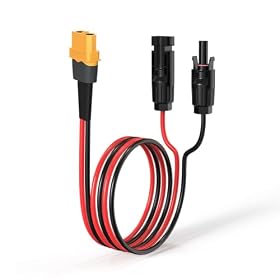
Connector type and polarity
Whether the station requires a specific solar adapter
Whether panels may be connected in series, parallel, or only as directed by the manufacturer
A simple estimate is:
solar charging time ≈ battery capacity in Wh ÷ usable solar input in watts
That estimate should use realistic average input, not only the panel's nameplate rating. A panel setup rated at a certain wattage may produce far less during morning, late afternoon, winter, cloud cover, or partial shade.
Solar-only recharge is therefore best viewed in terms of sun hours and daily energy, not just clock time. A battery that appears capable of recharging in a few hours under strong sun may take much longer across a full day if the panels spend much of that time below their rated output.
Product prices and availability are accurate as of the date/time indicated and are subject to change. Any price and availability information displayed on Amazon.com at the time of purchase will apply to the purchase of this product.
Which option is better after an outage?
Choose AC charging when speed matters most
AC charging is generally the better option when:
Utility power is available, even for a short period
You need to run a refrigerator or freezer and restore the battery quickly
You are preparing for a forecasted storm
You need predictable recharge timing
The power station has a high AC input rating
If the grid comes back temporarily, charge the station before running optional loads. A refrigerator's compressor startup and cycling demand can make it harder to estimate how much energy remains for charging.
Choose solar-only charging when the outage may continue
Solar is more useful when:
The outage may last for multiple days
Daylight is available and panels can be placed in full sun
You need to preserve battery capacity without relying on the grid
The station supports enough solar input for your battery size
You can reduce loads while charging
Solar-only operation may not restore a large battery quickly enough to support a refrigerator continuously, especially during cloudy weather. It can still provide valuable energy for shorter duty cycles, such as running the refrigerator periodically, charging phones, powering a modem, or operating lights.
Solar panels compatible with portable power stations
Product prices and availability are accurate as of the date/time indicated and are subject to change. Any price and availability information displayed on Amazon.com at the time of purchase will apply to the purchase of this product.
Running a fridge while charging
A refrigerator does not draw its rated running wattage continuously. It cycles on and off, and its compressor may briefly require more power when starting. Because of that, compare both:
Continuous inverter output: Must be sufficient for the refrigerator's running load.
Surge or peak output: Must accommodate compressor startup, if the manufacturer specifies a requirement.
Battery energy in Wh: Determines how long the station can supply the refrigerator between recharges.
Charging input: Determines whether incoming AC or solar power can keep up with the refrigerator's average use.
Some power stations support pass-through charging, allowing AC or solar input while powering connected devices. However, pass-through behavior varies. Charging may slow, stop, or use a battery-protection mode, and some manufacturers may not recommend relying on pass-through operation for every appliance.
For a fridge during an outage, use the manufacturer's guidance and monitor the station's input, output, and remaining battery display. Avoid assuming that solar input equal to the refrigerator's average draw will maintain the battery: conversion losses, compressor startup, cloudy periods, and charging limits reduce the margin.
Product prices and availability are accurate as of the date/time indicated and are subject to change. Any price and availability information displayed on Amazon.com at the time of purchase will apply to the purchase of this product.
Panel sizing and placement affect the result
More solar panel wattage is useful only if the portable power station can accept it and the panels are connected within its voltage and current limits. Oversizing or miswiring panels can damage equipment or trigger a protection shutdown.
For better solar performance:
Place panels in unobstructed sunlight.
Follow the manufacturer's voltage, current, and connection limits.
Keep connectors dry and inspect cables for damage.
Reposition panels as the sun moves if practical.
Avoid assuming a brief peak reading represents all-day production.
Keep the power station and cables within the stated operating-temperature range.
Do not connect solar panels in series or parallel unless the power station and panel instructions specifically permit that arrangement. If the connector, voltage range, or polarity is uncertain, stop and verify the specifications rather than relying on an adapter alone.
A practical outage charging strategy
For many households, AC and solar work best as complementary options rather than competing ones:
Before an outage: Fully charge the power station from AC power.
During a brief outage: Use the stored battery for essential loads and avoid unnecessary inverter use.
When grid power returns: Recharge from AC as quickly as the unit safely allows.
During a long outage: Connect compatible solar panels during daylight and reduce loads during weak sunlight.
At night: Reserve the remaining battery for essential devices rather than expecting solar recharge.
If you are buying a station mainly for emergency refrigerator backup, prioritize enough battery capacity and inverter output first. Then check whether its AC input is fast enough for short utility windows and whether its solar input is large enough to be useful in your expected weather and location.
How to compare two portable power stations
Use this checklist instead of comparing only advertised battery size:
Specification
Why it matters after an outage
Battery capacity in Wh
Indicates how much stored energy is available
AC charging input
Determines how quickly the station can recover from an outlet
Solar charging input
Sets the maximum useful panel input
Solar voltage and current range
Determines which panel configurations are compatible
Continuous AC output
Indicates what loads can run continuously
Surge output
Matters for compressor-based appliances such as refrigerators
Pass-through behavior
Shows how the station handles loads while charging
Operating temperature range
Affects charging in hot or cold conditions
Charge modes
May let you choose speed, noise, or battery-protection priorities
A station with a very large battery but modest solar input may take a long time to refill from panels. Conversely, a station with strong solar input but limited battery capacity may recharge quickly while providing less overnight runtime. Match both sides of the system to the outage scenario you expect.
Bottom line
AC charging is normally the fastest and most predictable way to recharge a portable power station after an outage. Solar-only charging is slower and less consistent, but it provides a path to continued operation when grid power remains unavailable. For refrigerator backup, compare battery capacity, inverter surge capability, AC input, solar input limits, and pass-through behavior together. Use solar as a sustained daytime energy source, not as a guarantee of rapid recovery in every weather condition.
FAQ
Is AC charging faster than solar charging for a portable power station?
Usually, yes. AC charging often provides a higher and more consistent input than a small solar setup. Actual speed depends on the station's AC input rating, battery capacity, charging mode, and temperature.
Can solar panels recharge a portable power station during an outage?
Yes, if the panels' voltage, current, connector, and wattage are compatible with the station's solar input. Actual production varies with sunlight, shading, panel angle, temperature, and cable losses.
Can I run a refrigerator while the power station charges from solar?
Possibly, if the station supports pass-through charging and its inverter can handle the refrigerator's running and startup demands. Solar input must also provide enough energy to offset the refrigerator's average consumption and charging losses.
How many solar panels do I need to recharge a portable power station?
There is no universal number. Compare the station's maximum solar input wattage and voltage range with the panels' specifications, then account for lower real-world production caused by clouds, shade, heat, and panel angle.
Should I fully charge a power station from AC before using solar after an outage?
If grid power is available, AC charging is usually the quickest way to build a full reserve. Once the outage begins, compatible solar panels can help extend runtime during daylight.