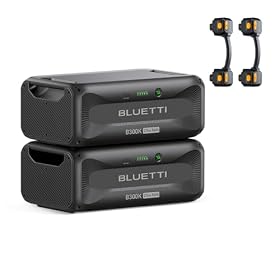
An expansion battery can extend a portable power station through a two-day outage, but the right size depends on your refrigerator’s average watt draw, startup surge, other essential loads, and how much recharge you can get during the outage.
Expansion battery for a 2-day outage
For a two-day outage, size the expansion battery around 48 hours of essential energy use, not just the refrigerator’s running wattage. Add the refrigerator’s average consumption, startup demand, internet equipment, lights, medical devices, and charging needs, then allow for inverter losses and reserve capacity. Most importantly, confirm that the expansion battery is designed for your exact portable power station; expansion batteries are generally not universal.
Start with the energy calculation
Portable power stations and expansion batteries are usually rated in watt-hours (Wh). Watt-hours estimate how much energy the battery stores:
watts × hours = watt-hours
For a two-day outage:
average load in watts × 48 hours = energy needed
That calculation is only a starting point. The power station’s inverter, battery-management system, and reserve limits mean the full advertised capacity is not normally available to your appliances. A practical planning method is to add a margin of roughly 20% to 30% to the calculated energy requirement, unless the manufacturer provides a more specific usable-capacity figure.
Example calculation
Suppose your essential loads average 100 watts while operating. Over 48 hours:
100 W × 48 hours = 4,800 Wh
With a 25% planning margin:
4,800 Wh × 1.25 = 6,000 Wh
This is an illustration, not a recommendation for a particular system. Your refrigerator may run intermittently rather than continuously, and other devices may have very different energy demands. Use measured consumption whenever possible.
Account for the refrigerator correctly
A refrigerator is often the largest intermittent load during an outage. Its label may show running watts, but that number does not tell you exactly how much energy it will consume over 48 hours. The compressor cycles on and off, and the average draw changes with room temperature, food load, door openings, and refrigerator condition.
Check these figures separately:
Running watts: power used while the compressor is operating.
Startup or surge watts: the brief demand when the compressor starts.
Average energy use: the most useful figure for estimating battery runtime.
Voltage and plug type: these must match the power station’s output and local electrical standards.
A plug-in power meter can help estimate the refrigerator’s actual energy use before an outage. Measure it long enough to capture several compressor cycles, then use the measured daily or hourly average rather than assuming the compressor runs continuously.
Do not size the system only for the refrigerator’s running watts. The power station must also support the refrigerator’s startup surge. If the inverter cannot handle that brief demand, the refrigerator may fail to start even when the battery has plenty of Wh remaining.
Product prices and availability are accurate as of the date/time indicated and are subject to change. Any price and availability information displayed on Amazon.com at the time of purchase will apply to the purchase of this product.
Add every load you plan to run
Make a short outage list before buying an expansion battery. Include both continuous and intermittent devices:
Refrigerator or freezer
Wi-Fi modem and router
Medical equipment
LED lights
Phones, tablets, and laptops
Television or radio
Small fans
CPAP equipment or other essential electronics
For each device, record its watts and estimated hours of use per day. Then calculate:
watts × hours per day × 2 days = two-day energy use
For devices with duty cycles, use their average energy use if available. For example, a refrigerator that cycles on and off should not automatically be treated as a full-time load at its compressor wattage.
Avoid adding optional loads until the refrigerator and genuinely essential devices are covered. Electric heaters, hot plates, kettles, hair dryers, coffee makers, and similar heating appliances can consume energy quickly and may require more inverter power than a small portable station can provide.
Product prices and availability are accurate as of the date/time indicated and are subject to change. Any price and availability information displayed on Amazon.com at the time of purchase will apply to the purchase of this product.
Decide how much expansion capacity you need
The total system capacity is generally the portable power station’s internal battery plus the compatible expansion battery or batteries. Compare that combined nominal Wh capacity with your estimated two-day requirement, then apply the system’s usable-capacity and operating limitations.
If you do not know the usable-capacity fraction, leave a conservative margin instead of assuming every advertised Wh is available. Also account for cold temperatures, battery aging, inverter losses, and the fact that some systems reserve energy to protect the battery.
The refrigerator has a modest measured daily energy use.
You are powering only a few essential electronics.
You can recharge from solar, a vehicle, or a generator during the outage.
The power station and expansion battery provide enough inverter output for the refrigerator’s startup surge.
When you may need more capacity or a different system
Consider a larger system, additional compatible batteries, or a different backup plan when:
You need continuous refrigeration plus medical equipment or other high-priority loads.
You cannot recharge during the outage.
You also want to run heating or cooking appliances.
Your calculated energy need is close to the system’s advertised maximum capacity.
The expansion battery would make the system too heavy or difficult to move.
More battery capacity does not increase the inverter’s maximum output. If the original power station cannot start or run the refrigerator, adding Wh alone will not solve the problem.
Product prices and availability are accurate as of the date/time indicated and are subject to change. Any price and availability information displayed on Amazon.com at the time of purchase will apply to the purchase of this product.
Check compatibility before buying
Expansion batteries usually connect only to designated portable power station families. Before ordering, verify all of the following in the manufacturer’s documentation:
Exact power station model and supported expansion-battery models
Maximum number of expansion batteries
Required expansion cable or connector
Whether the battery can be added after the main station has been used
Supported charging methods and charge limits
Whether the system supports pass-through charging
Whether the batteries need matching firmware, charge levels, or installation steps
Whether the combined system can power AC loads while charging
Do not connect a battery that merely has a similar voltage, connector, or appearance. Use the specified battery and cable for the system. Improper combinations can damage equipment or create a fire and shock hazard.
Plan for recharging during the outage
An expansion battery is most useful when you can either store enough energy for the full 48 hours or recharge the system as you go. Solar panels can extend runtime, but their actual output depends on sunlight, panel orientation, weather, shading, temperature, and the power station’s solar-input limits.
Before relying on solar, confirm:
Maximum solar-input voltage and current
Maximum solar charging wattage
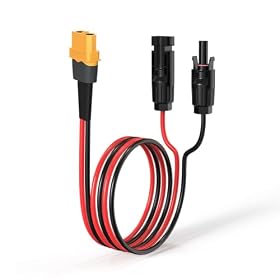
Connector type and polarity
Whether the panels can charge the combined battery system
Whether charging is allowed while your essential devices are running
A car charger can provide another option, but it may recharge slowly and can drain a vehicle battery if the engine is not running. Follow the vehicle and power-station manufacturer’s instructions, and never operate a vehicle in an enclosed garage or other poorly ventilated area.
A larger expansion battery without a recharge plan may still leave you short during a long outage. Estimate how many Wh you consume per day and how many Wh your available charging sources can realistically replace.
Setup tips for refrigerator backup
Before an outage, do a controlled compatibility check according to the equipment instructions. Confirm that the refrigerator starts normally, the power station does not report an overload, and the cable and plugs remain cool during operation.
During the outage:
Keep the refrigerator and freezer doors closed as much as possible.
Connect only the loads you planned for.
Watch the station’s remaining Wh, output watts, and warning indicators.
Disconnect optional devices if the battery is draining faster than expected.
Keep the power station dry, ventilated, and away from heat sources.
Do not backfeed household wiring through a wall outlet. Use approved transfer equipment installed as directed by a qualified electrician.
If the refrigerator repeatedly clicks, shuts off, or causes an overload warning, disconnect it and review the station’s surge rating and the refrigerator’s startup demand. Do not repeatedly reset an overloaded system.
When replacing the expansion battery is sensible
An expansion battery is a reasonable purchase when your existing power station has enough inverter output, uses a supported battery connection, and simply needs more runtime. It is not the right fix when the station is too small for the refrigerator’s startup surge, lacks the required output type, or cannot accept an expansion battery.
Replace or upgrade the system when the battery has significantly reduced runtime, shows physical swelling or damage, will not charge normally, or produces repeated fault warnings. Stop using a damaged or swollen battery and follow the manufacturer’s service or recycling instructions. Do not open, repair, or modify a lithium battery yourself.
For a two-day outage, buy based on the measured 48-hour energy requirement, surge capability, compatibility, and recharge plan. The largest battery is not automatically the best choice if the inverter, connectors, charging system, or safety controls do not match your needs.
FAQ
How many watt-hours do I need for a 2-day outage?
Multiply your average load in watts by 48 hours, add the refrigerator and other essential devices, then include a margin for inverter losses, reserve capacity, and battery conditions. Use measured daily energy consumption when possible instead of relying only on appliance running watts.
Can any expansion battery work with any portable power station?
No. Expansion batteries generally use system-specific connectors, communication controls, voltage requirements, and firmware. Use only batteries and cables listed as compatible by the power station manufacturer.
Will an expansion battery make a refrigerator start if the power station is too small?
Usually not. An expansion battery adds stored energy in Wh, but it generally does not increase the power station inverter’s maximum output or startup-surge capability. The station must already be able to handle the refrigerator’s startup demand.
Is a solar panel necessary for a 2-day outage?
No, if the combined battery capacity can cover your calculated 48-hour load. Solar becomes valuable when you want to extend runtime, reduce battery size, or prepare for an outage longer than two days. Check the station’s solar-input limits before connecting panels.