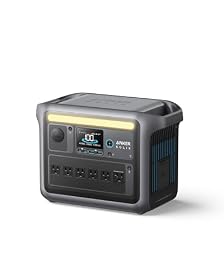
Power station shutting off with a fridge plugged in
A refrigerator can make a portable power station shut down because its compressor briefly draws much more power when it starts. Check the startup surge, inverter capacity, battery level, connections, operating mode, and temperature before replacing the power station.
A portable power station usually shuts off with a refrigerator plugged in because the fridge’s compressor creates a brief startup surge that exceeds the station’s inverter capacity. Low battery, a loose or unsuitable connection, a temperature protection shutdown, or an overloaded power station can cause the same symptom. Unplug other loads, check the fridge’s starting requirements, and work through the checks below before buying replacement equipment.
Check the power station’s inverter rating
The important specification is the station’s AC output rating, usually listed in watts, along with its surge or peak rating. A refrigerator may use relatively modest power while running but demand substantially more for a moment when the compressor starts.
Compare the refrigerator’s label or manual with the power station’s specifications:
Running watts: Power used after the compressor is operating.
Starting or surge watts: Short-duration demand when the compressor starts.
Continuous AC output: The load the inverter can support continuously.
Surge capacity and duration: How much extra power the inverter can provide, and for how long.
A station can have enough continuous wattage but still shut down if its surge capacity is too low. Do not assume that a higher battery capacity in watt-hours automatically means a stronger inverter. Battery capacity affects runtime; inverter output affects whether the refrigerator can start.
If the refrigerator’s starting requirement is not listed, check its manual, manufacturer specifications, or the rating information on the appliance. Avoid relying on a generic estimate when selecting a station for an outage-critical refrigerator.
Remove every other AC load
Disconnect lights, chargers, heaters, coffee makers, fans, and other appliances from the power station. A fridge may start normally by itself but trip the station when the combined load approaches the inverter limit.
Then connect only the refrigerator directly to the station’s AC outlet. If it runs by itself but shuts down when another appliance is added, the station is probably overloaded rather than defective.
High-wattage heating appliances are especially likely to cause trouble. Do not connect a space heater, hot plate, microwave, toaster, or similar load to the same small power station while trying to run a refrigerator.
Higher-output station for refrigerator startup loads
Product prices and availability are accurate as of the date/time indicated and are subject to change. Any price and availability information displayed on Amazon.com at the time of purchase will apply to the purchase of this product.
Check the battery level and low-temperature conditions
A power station may shut down under load when its battery is nearly depleted. The battery display can look adequate while the fridge starts, but the voltage may drop enough under the sudden demand to trigger protection.
Try these steps:
Recharge the station according to the manufacturer’s instructions.
Let it rest briefly after charging if the manual recommends that procedure.
Test the refrigerator with no other connected loads.
Check whether the station reports low-voltage, overload, or protection status.
Cold conditions can also reduce available battery performance. Keep the station within its specified operating temperature range, and do not charge or operate it outside the manufacturer’s limits. Do not place it in a sealed, unventilated area to keep it warm.
Product prices and availability are accurate as of the date/time indicated and are subject to change. Any price and availability information displayed on Amazon.com at the time of purchase will apply to the purchase of this product.
Inspect the connection and AC output settings
Use the refrigerator’s normal power cord and plug it directly into the station’s AC outlet. Avoid damaged extension cords, loose adapters, improvised wiring, or power strips that are not suitable for the load.
Check that:
The station’s AC output is switched on.
The plug is fully seated at both ends.
The power cord and plug show no heat damage, cuts, or looseness.
No inverter, voltage, or frequency setting conflicts with the refrigerator’s requirements.
The refrigerator is not connected through a transfer device or adapter that is not approved for that purpose.
Never connect a portable power station to a home outlet in an attempt to energize household wiring unless the system includes a properly installed, code-compliant transfer arrangement. Backfeeding an outlet can seriously injure someone and damage equipment.
Alternative recharge option during extended outages
Product prices and availability are accurate as of the date/time indicated and are subject to change. Any price and availability information displayed on Amazon.com at the time of purchase will apply to the purchase of this product.
Turn off Eco or energy-saving output mode temporarily
Some power stations have an Eco mode that turns the AC inverter off when the load appears low. A refrigerator cycles between running and idle, so Eco mode may interpret the compressor’s off period as no load and shut down the outlet before the next cooling cycle.
Turn Eco mode off for the test if the station provides that option. Consult the station’s manual because the feature name and behavior vary. If the refrigerator works with Eco mode disabled, the station and fridge may be compatible, but the station will use more energy while its AC inverter remains active.
Check for a refrigerator-specific issue
If the power station handles other appliances but shuts down only with this refrigerator, the appliance may have an unusually high starting demand or a mechanical problem. Possible warning signs include:
The compressor repeatedly clicks but does not start.
The fridge hums briefly, then stops.
The refrigerator starts and stops unusually often.
The compressor is unusually hot.
The appliance also struggles when connected to a normal wall outlet.
Unplug the refrigerator and follow its manufacturer’s troubleshooting guidance. Do not repeatedly reset the power station while the compressor is clicking or failing to start. A refrigerator that cannot start reliably from a household outlet should be inspected by a qualified appliance technician.
Allow ventilation and check temperature protection
Portable power stations can shut down when the inverter or battery becomes too hot. Leave clearance around the station’s vents, keep it out of direct sun, and do not cover it with blankets or clothing. Do not operate it inside a vehicle or enclosed space unless the manufacturer specifically permits that setup and ventilation is adequate.
Let the unit cool, remove other loads, and try again. If it shuts down immediately while cool and lightly loaded, note any warning code or indicator pattern and contact the power station manufacturer.
Test the fridge’s startup behavior carefully
After the station is fully charged and cooled, connect only the refrigerator and observe the display during compressor startup. If the station shows an overload warning or its AC output cuts off at the same moment each time, the startup surge is the most likely cause.
A plug-in watt meter may help show running consumption, but many basic meters do not capture the brief compressor surge accurately. Do not treat a low running-watt reading as proof that the power station has enough startup capacity.
If the station shuts off even when the refrigerator is not starting, or if it shuts down with a small known load, stop using that AC outlet and contact the manufacturer. Internal inverter or battery faults are not appropriate do-it-yourself repairs.
When you need a larger power station
A replacement or larger station is reasonable when:
The fridge’s documented starting demand exceeds the station’s surge capability.
The station works normally with smaller loads but trips every time the fridge starts.
The battery is healthy and charged, the station is properly ventilated, and Eco mode is disabled.
The refrigerator is the only connected appliance.
Choose based on both continuous AC output and surge capability, not watt-hours alone. For outage use, also consider usable battery capacity, recharge options, noise, operating temperature limits, and whether the station can be safely kept near the refrigerator. If the refrigerator must run for an extended outage, calculate expected runtime from its cycling behavior rather than assuming its nameplate wattage is constant.
If the station fails with multiple small appliances or displays a persistent fault code, replacing the station may be more sensible than trying to support the fridge with it. Keep warranty documentation and contact the manufacturer before opening the unit; battery and inverter repairs can involve hazardous energy.
FAQ
Why does my power station shut off when the refrigerator compressor starts?
The compressor creates a short startup surge that may exceed the power station’s inverter or surge rating. The station shuts down to protect itself even if the refrigerator’s normal running wattage is lower.
Will a higher watt-hour power station run my refrigerator?
Not necessarily. Watt-hours indicate stored energy and potential runtime, while the inverter’s continuous and surge watt ratings determine whether it can start and operate the refrigerator.
Should Eco mode be on when powering a refrigerator?
Usually, Eco mode should be disabled for testing because a refrigerator cycles between running and idle. Eco mode may turn off the AC inverter during an idle period and prevent the next compressor cycle from starting.
Can I use an extension cord with a portable power station and refrigerator?
A direct connection is preferable. If an extension cord is necessary, follow the station and refrigerator manufacturers’ instructions and use an undamaged cord suitable for the load. Do not use damaged cords, loose adapters, or improvised wiring.
What should I do if the power station still shuts off with only the fridge connected?
Fully charge and cool the station, disable Eco mode, check the plug and cords, and compare the refrigerator’s starting requirement with the station’s surge rating. If the ratings are adequate but shutdowns continue, contact the manufacturer or have the refrigerator inspected rather than opening the power station.