The best expandable power station is one with enough inverter output for your appliances today, a battery ecosystem you can afford later, and clear limits on expansion. Here is how to compare them without buying more capacity than you need.
Best power station you can expand later
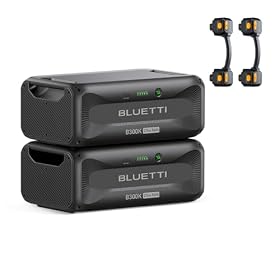
The best power station you can expand later is not necessarily the largest model. Look for a unit with enough continuous and surge output for your appliances, a battery capacity that covers your immediate needs, and a clearly supported expansion system. Before buying, confirm the exact expansion batteries, maximum combined capacity, charging method, and whether expansion works while the station is powering loads.
What “expandable” means
An expandable power station has a built-in battery plus one or more ports or connections for adding compatible battery modules. The extra battery increases stored energy, measured in watt-hours (Wh), but it does not automatically increase the inverter’s output.
That distinction matters:
More watt-hours means longer runtime.
More inverter watts means the station can run larger loads.
More surge capacity helps start motors and compressors.
An expansion battery usually adds runtime, not appliance-starting ability.
A station with a 2,000-watt inverter does not become a 4,000-watt inverter simply because an expansion battery is connected. Check the manufacturer’s specifications for any operating modes that combine or change output.
The most important specifications
Battery capacity: Wh
Watt-hours indicate how much energy the battery stores. A rough runtime estimate is:
Runtime in hours = battery capacity in Wh × usable-efficiency factor ÷ appliance watts
For a conservative estimate, use an efficiency factor of about 0.8 rather than assuming every rated watt-hour reaches the appliance. Actual runtime varies with battery condition, temperature, inverter losses, low-battery shutdown settings, and the appliance’s changing power draw.
For example, a 100-watt load may run for several hours from a station in the 1,000-Wh class, but the result will not equal exactly 10 hours. A refrigerator is especially difficult to estimate because its compressor cycles on and off and can briefly draw much more power when starting.
Continuous output: W
Continuous output is the amount of power the inverter can supply over time. Add the running watts of the devices you expect to use simultaneously, then leave headroom rather than operating at the limit.
For outage use, consider the combined load of items such as:
Refrigerator or freezer
Internet modem and router
LED lights
CPAP machine
Phone and laptop chargers
Small fans
A space heater, hot plate, coffee maker, hair dryer, or microwave can consume far more power than these essentials. Running high-wattage heating appliances may drain the battery quickly even when the inverter can support them.
Surge output: W
Motors and compressors can require a short startup surge. A refrigerator, freezer, sump pump, or power tool may have a running draw that looks manageable but still fail to start if the station’s surge rating is insufficient.
Do not rely only on a vague “peak power” number. Check the continuous rating, surge rating, surge duration if published, and the manufacturer’s guidance for motor-driven loads.
Expansion capacity and compatibility
An expandable model is only useful if its expansion system fits your future plans. Check:
Which battery modules are approved
The maximum number of expansion batteries
The maximum total Wh capacity
Whether batteries must be the same type or generation
Whether firmware or a specific cable is required
Whether the expansion battery can be charged independently
Whether the station supports pass-through operation with the added battery
How the system behaves when batteries have different charge levels
Avoid assuming that batteries from the same brand are interchangeable. Connector shape, voltage, communication protocols, firmware, and battery chemistry can differ between product families.
Product prices and availability are accurate as of the date/time indicated and are subject to change. Any price and availability information displayed on Amazon.com at the time of purchase will apply to the purchase of this product.
Choose the right expansion strategy
For occasional outages
Start with enough capacity to run essential electronics and keep food cold for the expected outage period. An expansion battery can be a sensible later purchase if you are unsure how long outages will last.
Prioritize a dependable inverter, refrigerator compatibility, and a battery system with clear support documentation. Buying a smaller base unit and adding capacity later can reduce the initial cost, but only if the base unit already handles your highest startup and continuous loads.
For refrigerator backup
A refrigerator backup setup needs both adequate energy capacity and motor-starting capability. Read the refrigerator label or manual for electrical information, but recognize that the label may not show the complete startup requirement.
A good approach is to choose a station that:
Supports the refrigerator’s running load with headroom.
Has a documented surge rating suitable for compressor loads.
Provides enough Wh for the desired backup period.
Can accept an expansion battery if longer outages are common.
Keep the refrigerator closed as much as practical during an outage. Do not connect a portable power station to a home’s wall outlets or electrical panel through an improvised cable. A transfer switch and appropriate installation by a qualified professional are required for safe whole-home or hardwired backup.
For camping and travel
Camping loads are often smaller but may last longer. Phones, lights, cameras, laptops, portable refrigerators, and fans usually favor a compact station with efficient low-load operation. Expansion is useful when adding a portable refrigerator or spending several days away from grid power.
Check the station’s weight, charging options, noise specifications if published, and whether the expansion battery makes the system too heavy for your intended use. A larger Wh rating is not automatically better if the system becomes impractical to transport.
Product prices and availability are accurate as of the date/time indicated and are subject to change. Any price and availability information displayed on Amazon.com at the time of purchase will apply to the purchase of this product.
Solar charging and expansion
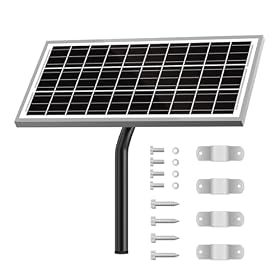
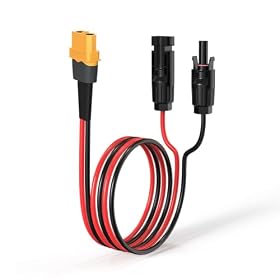
If you plan to add solar panels later, check solar input limits separately from battery capacity. Important specifications include the supported input voltage range, maximum solar watts, connector type, and whether the unit can charge from solar while powering devices.
Do not connect a panel or cable that exceeds the station’s voltage or current limits. Solar panels advertised with a certain wattage may produce less in real conditions because of shade, angle, heat, and cloud cover. Expansion batteries increase storage but do not necessarily increase the station’s solar charging speed, so a larger battery may take longer to refill.
Product prices and availability are accurate as of the date/time indicated and are subject to change. Any price and availability information displayed on Amazon.com at the time of purchase will apply to the purchase of this product.
Common buying mistakes
Choosing by Wh alone and ignoring inverter output
Assuming an expansion battery increases wattage
Failing to account for refrigerator startup surge
Buying a base unit whose supported expansion batteries are unavailable or costly
Expecting a solar panel to refill a large battery quickly in poor weather
Connecting the station to household wiring without proper transfer equipment
When a non-expandable station may be better
An expandable model is not always the best value. A non-expandable station may be preferable when you need a lightweight camping unit, have predictable small loads, or can buy the capacity you need upfront. Expansion systems also add cables, compatibility checks, and another battery to store and maintain.
Choose an expandable station when your likely energy needs may grow, outages vary in length, or you want to spread the purchase over time. Choose a fixed-capacity model when simplicity, portability, or a lower system weight matters more than future runtime.
Final buying checklist
Before choosing an expandable power station, verify:
Continuous inverter output exceeds your combined running load.
Surge output is appropriate for refrigerators, freezers, pumps, or tools.
Base capacity covers your essential loads for the immediate need.
Expansion batteries are explicitly listed as compatible.
Maximum expanded Wh meets your realistic outage or camping goal.
Solar, AC, and car-charging limits suit your charging plan.
The total weight is acceptable with expansion batteries attached.
The manufacturer provides clear manuals, cables, and safety instructions.
If you cannot confirm compatibility or startup requirements from the manufacturer’s documentation, treat that as a reason to choose a better-documented system rather than guessing.
FAQ
Does adding an expansion battery increase a power station’s watt output?
Usually, no. An expansion battery generally increases stored energy in watt-hours and extends runtime. The inverter’s continuous and surge output normally remain limited to the base station’s ratings unless the manufacturer specifically documents a combined-output mode.
How much power station capacity do I need for a refrigerator?
It depends on the refrigerator’s cycling energy use, startup surge, outage duration, and other connected loads. Choose by checking both watt-hours for runtime and continuous/surge watts for compressor startup. Manufacturer guidance or a qualified electrician can help when the refrigerator’s startup requirement is unclear.
Can I add any battery from the same brand?
No. Expansion batteries are usually limited to specific product families and may require a particular cable, connector, voltage, or firmware. Confirm compatibility in the exact power station manual or product documentation.
Is an expandable power station better for outages?
It can be, especially when outage length is unpredictable. Expansion lets you add runtime later, but it does not replace the need for adequate inverter output, refrigerator surge support, safe household connection practices, and a practical charging plan.